


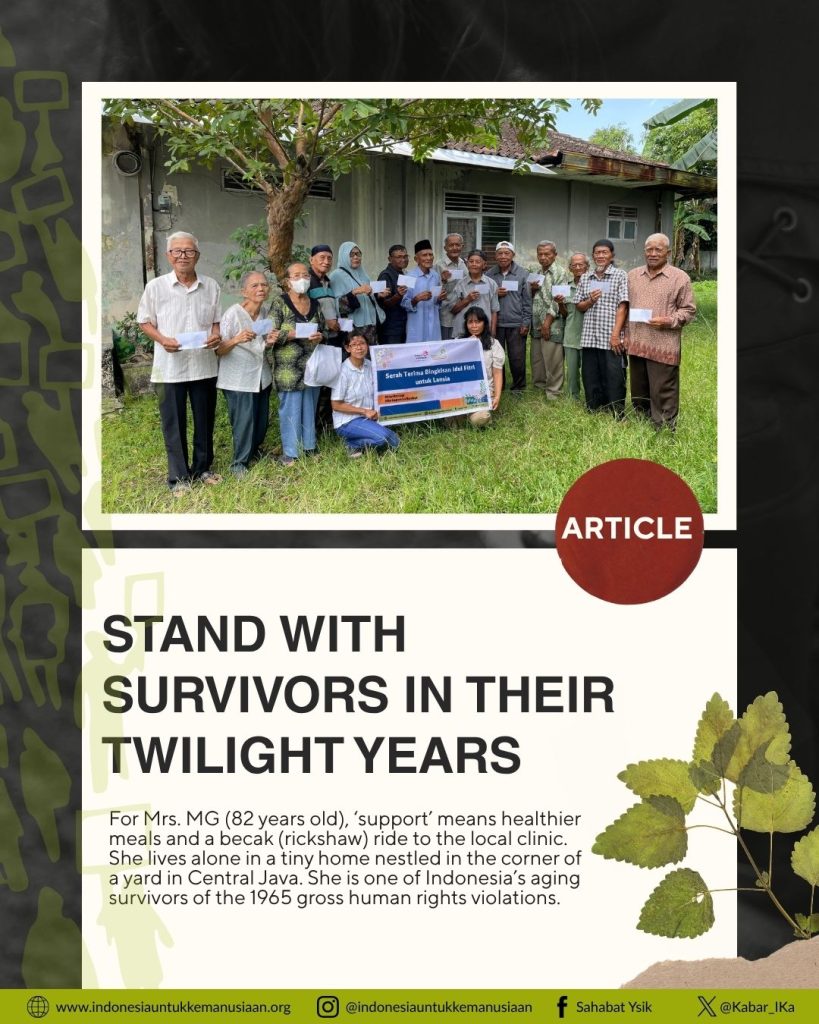
For Mrs. MG (82 years old), ‘support’ means healthier meals and a becak (rickshaw) ride to the local clinic. She lives alone in a tiny home nestled in the corner of a yard in Central Java. She is one of Indonesia’s aging survivors of the 1965 gross human rights violations.
Across Indonesia, survivors of the political violence of 1965-66 are now growing old. Many live with fragile health, limited incomes, and needs as simple and urgent as nutritious food, medicine, transportation to clinics, or walking aids. As physical health deteriorates and economic hardship persists, access to basic daily necessities, medical treatment, and compassionate psychosocial support becomes an urgent matter of dignity. Beyond physical ailments, these survivors endure persistent structural obstacles and systemic inequality.
However, more than six decades ago, mass killings, detention without trial, displacement, and prolonged discrimination changed their lives. Today, many survivors are still seeking recognition and the fulfillment of rights long denied to them. Decades later, while government efforts toward resolution continue at a measured pace, Indonesia for Humanity (IKa) walks alongside survivors by opening public donations through GlobalGiving.
For these aging individuals, the struggle for recognition continues, but age does not wait. To address these challenges, IKa’s Human Rights Fund (Pundi Insani) has supported survivors of past gross human rights violations and human rights defenders across Indonesia for more than three decades. Working with local organizations, the fund combines solidarity and practical assistance with longer-term efforts to help survivors access recognition, services, and justice.
These acts of care bring profound moments of joy and humanity to survivors living in quiet hardship. In Central Java, Mr. SK (79 years old), who patiently cares for his wife with mental health conditions, expressed deep gratitude for the support. He reflected:
“Thank you, this assistance helps lighten my burden and ease the cost of our daily necessities. Furthermore, this makes us feel ‘diuwongke’ humanized and truly valued.”
Public solidarity takes shape through simple, meaningful gestures, such as holiday gifts during Eid and Christmas, as well as essential mobility aids like walking sticks and wheelchairs. Often times, the gift encompassed home visits to these survivors.
This dignity-centered spirit is carried out in collaboration with local communities across Indonesia. Their efforts offer local support, trauma care, and help with documentation for survivors. Through this network, IKa has provided support across 27 provinces since 1995.
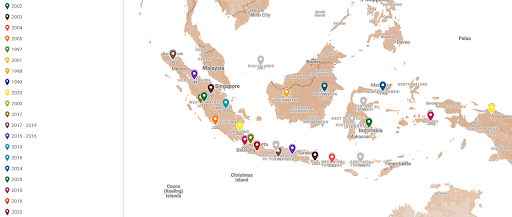
Figure 1: IKa’s Human Rights Fund has provided support across 27 Indonesian provinces since 1995. (source)
In parallel, being part of the Coalition for Justice and Truth (KKPK), IKa contributes to collective efforts to engage national bodies such as the National Human Rights Commission (Komnas HAM) and Witness and Victim Protection Agency (LPSK) to grant victims’ economic, social, and cultural (ESCR/ecosoc) rights. These processes often require patience and persistence. Behind every document and administrative step is a personal story and a continuing effort to have survivors’ experiences recognized, their dignity upheld, and the support they are entitled to secure. Public donations, while ensuring that survivors’ urgent needs are not left unmet, do not replace that responsibility.
Public solidarity through GlobalGiving makes this collective strength possible. Your contributions help fund essential mobility aids, daily relief, and persistent advocacy to live out their remaining years. It sends a simple, powerful message to Mrs MG, Mr SK, and other survivors like them: after a lifetime of waiting, they are seen, honored, and not forgotten.