


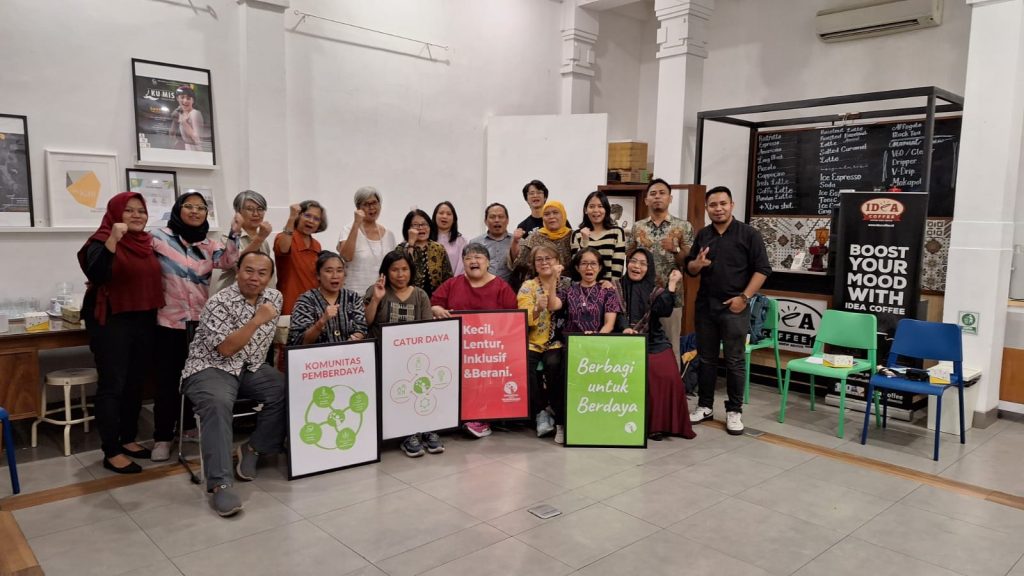


In a world grappling with increasing disparities, the role of aid and resources has never been more critical. For years, the global aid landscape has been shaped by an imbalanced power dynamic, echoing remnants of a colonial past. Today, the need for change is undeniable. This is where Indonesia untuk Kemanusiaan (IKa) joins the rally driven by the conviction that it’s time to question the status quo.
Indonesia, like many nations, has long been a recipient of international aid. These well-intentioned efforts, often coming from developed countries, have played a vital role in addressing critical issues such as poverty, education, and healthcare. However, they’ve also perpetuated a troubling narrative, one that has reinforced global power imbalances.
Recognizing the urgency of transforming this narrative, IKa initiated the Forum Belajar Sumber Daya Baru (FAJAR). This visionary initiative serves as a platform for discussions aimed at reshaping the aid and resource landscape within Indonesia. FAJAR’s core mission is to foster diverse, equitable, and sustainable development resources in Indonesia, thus disrupting the longstanding pattern of top-down aid.
FAJAR is not a solitary endeavor; it is part of a broader global movement that seeks to “Shift The Power.” This movement advocates for a more balanced approach to aid, one that values local knowledge, perspectives, and leadership. With the support of the Global Fund for Community Foundations (GFCF), FAJAR is on a mission to amplify the voices and experiences of Indonesian civil society organizations (CSOs) concerning aid and resources.
The inaugural FAJAR discussion took place virtually on 20 September 2023. Among the distinguished panelists were Dylan Mathews, CEO of Peace Direct; Kamala Chandrakirana, Chairperson of the Board of Trustees of Indonesia untuk Kemanusiaan; and Lian Gogali, Founder of Institute Mosintuwu.
The topic of discussion was compelling: “The dynamics of power relations in the pursuit of resources that are equitable and sustainable at the international, national, and local levels.” What unfolded was a profound dialogue that exposed the intricacies of an imbalanced system.
There is the urgent need to reform the international system, which often sidelines local organizations. Insights from the discussion unveiled the excuses commonly used to maintain the status quo, from questioning local organizations’ capacity to the risks associated with direct funding.
While aid was aimed to realize social justice, it sometimes backfired to the communities they wished to serve. It’s crucial to recognize that aid has often been perceived as an act of charity, a well-intentioned gesture, rather than a pursuit of social justice. This perspective has profoundly influenced the aid models in place. Under this lens, aid recipients were often seen as either lacking in strength or entangled in conflicts.
These aid models have inadvertently contributed to the erosion of local knowledge. This erosion is discernible in the aid mechanisms themselves, the procedural aspects, and the thematic focus of various programs, such as training and workshops. The framework through which aid was disseminated operated on the assumption that local populations possessed insufficient or irrelevant knowledge. Local wisdom was consistently marginalized, considered inconsequential.
Central to the discussion was the concept of decolonization, a term not universally embraced but undeniably pivotal in describing the transformation needed in aid practices. Decolonization, in this context, goes beyond critiquing former colonial powers. It’s about dismantling neo-colonial worldviews, which portray the Global North as possessing knowledge while casting the Global South as helpless.
While the discussion highlighted the pervasive problems, it also inspired hope and a call to action. Decolonization, as emphasized, involves naming racism as a problem and dismantling neo-colonial attitudes. It demands a complete transformation of the sector, with local organizations taking the lead.
A critical shift is needed in the discourse surrounding aid models. This shift should prioritize understanding the intricacies of the local context before anything else. Regrettably, these models have also given rise to a new elite class, primarily benefiting from unequal access to resources and opportunities. This bias towards a specific social class has excluded grassroots communities from active participation. Their valuable knowledge and unique perspectives have been unjustly sidelined when designing aid programs.
The structured disbursement of aid has engendered broader cultural and attitudinal changes. It has instilled a pervasive materialistic outlook, altering social relationships and values. This transformation is a direct result of how aid was systematically distributed and ingrained in the culture.
The localization approach is seen as a step in the right direction, aiming to transfer more funds directly to local organizations. However, critiques have arisen, arguing that it has become more about metrics and funding mechanisms than addressing power dynamics and structural racism. The focus should be on investing in local organizations rather than merely converting existing initiatives into a localized format. A decolonized sector, it was agreed, would ultimately be a transformed one, with power lying in the hands of local organizations.
However, this transformation is easier said than done. The inertia of large bureaucracies and the uncertainty surrounding the path forward have led to a form of paralysis in the sector. The challenge now is to translate intentions into meaningful actions. It was clear that conversations about aid and decolonization shouldn’t be monopolized by Global North organizations. Global South organizations must have a voice in shaping the narrative.
The discussion proceeded on the second day to convene representatives of Saya Perempuan Anti-Korupsi (SPAK), Yayasan Bina Swadaya, Mama Aletha Fund, Aliansi Masyarakat Adat Nusantara (AMAN), Roemah Inspirit, Lembaga Bantuan Hukum Jakarta (LBH Jakarta), and Indonesia Corruption Watch (ICW).
At the heart of this intricate discourse lay a fundamental question: as new channels for accessing resources emerge, how do they influence the autonomy and agency of these organizations?
Over the course of the discussions, diverse experiences and strategies came to the fore. Some had ventured into resource mobilization, pioneering social enterprises and public fundraising efforts. Others navigated the complex web of global donor funding.
For advocacy-oriented CSOs, particularly those engaged in battling corruption, securing funds from foreign donors could be an arduous endeavor. The asymmetrical power relations inherent in this process often meant grappling with external influences and interference. Even the terms of engagement, embedded in contractual agreements, could be wielded as tools of intervention by donors. This left CSOs walking a precarious tightrope between fulfilling their missions and complying with external expectations.
The transition to social enterprise, a promising avenue for sustainability, necessitated the development of a new skill set. Beyond the realms of advocacy, managing businesses and marketing products demanded a different expertise. The harmonization of these two seemingly divergent paths became crucial for CSOs seeking both financial viability and social impact.
In essence, the discussions shed light on a profound reflection: power and resources are inseparable bedfellows. While the landscape of resource access for CSOs is evolving, the critical need for vigilance remains. The influx of new avenues must be met with discernment to ensure that organizational sovereignty is not eroded but fortified.
This captivating dialogue was not merely an exploration of past experiences and present challenges; it was a collective rumination on the future. It was an acknowledgment that the transformation of the aid ecosystem must go hand in hand with the revitalization of resource management. Power dynamics must shift, and CSOs must be empowered to chart their destinies. This process is fraught with complexities, but within these complexities lie the seeds of change. The world of aid is evolving, and in this evolution, there is hope for a more equitable and sustainable future.