[Public Statement] Indonesia Bergerak Coalition (Indonesia on the Move)
The Government Must Prohibit Eid Holiday Travel and Enforce Localized Quarantine
The number of Covid-19 cases in Indonesia continues to rise, while mass-testing has not yet begun and the spread of Covid-19 to the regions is increasing and Indonesia experiencing on of the highest global death rates.
Experience from other countries, epidemiological projections and the speed of infection is evidence that the tradition of mass travel and return to the village for Eid, known as mudik, will certainly only serve to see an exponential increase and acceleration of the spread of infection to Indonesia’s 514 towns and districts.
The Government’s indecision regarding localized quarantine has caused a number of regions and grass-roots communities to take matters into their own hands and enforce a lockdown independently of Government, by prohibiting travelers from outside areas to enter their localities. Central government has failed because the decision to implement a lockdown is under the authority of the central government.
Thus, we the Civil Society Network Indonesia Bergerak urge the Government to fulfill our six demands!
SARS-CoV-2 or more generally referred to as Covid-19 is a new virus with a number of symptoms including sore throat, dry cough and fever.
Some people experience much more serious symptoms that result in pneumonia and breathing difficulties. A small but significant number of cases result on death.
Minimize the risk of coronavirus infection!
* Wash your hands with running water and soap, or with alcohol-based hand sanitizer
* Cover your nose and face with a tissue or the crook of your arm when you cough or sneeze
* Avoid contact with anyone that has flu symptoms
* Avoid crowded places
* Ensure meat and eggs are well cooked
* Avoid contact with animals
Protect yourself and others from infection!
Wash your hands frequently…
* After coughing or sneezing
* When taking care of someone who is unwell
* Before and after working with food
* Before eating
* After going to the toilet
* When your hands are dirty
* After dealing with animals and their excrement
Protect others from infection!
* Avoid contact with others if you have a cough and a fever
* Don’t spit in public places
* If you have a fever, a cough and have difficulty breathing, immediately seek out medical attention and ensure you inform the health provider of your travel history
What do you need to do for the ones you love?
* Check on them regularly, particularly those that have been impacted by the pandemic
* Try and support people to do things they enjoy
* Share information from trusted sources to avoid worry
* Give appropriate advice to children and make sure they remain calm
Be careful…
If you are over 60 and have the following medical conditions:
* Heart disease
* Respiratory disease
* Diabetes
Avoid crowded place and place where you might interact with people who are unwell.
IT IS TIME FOR INDONESIA TO WORK TOGETHER TO DEAL WITH THE COVID-19 PANDEMIC
The WHO has already designated Covid-19 as a global pandemic, including Indonesia as one of the nations most exposed to the dangers of the virus, and where victims continue to rise as the spread of infection increases.
The government has already designated Covid-19 as a national disaster and has established a Task Force for the Acceleration of the Management of Covid-19, which has established a policy of appealing to members of the public to implement social distancing, as well as various other response initiatives.
The pandemic is having a comprehensive social and economic impact, including human rights which is hitting vulnerable groups particularly hard. They also bear the brunt of government policies such as isolation, quarantine at home, quarantine in hospitals as well as other more serious steps such as regional quarantine. Not to mention the prohibition and marginalization of SMEs, their workforce and their consumers, contract workers as well as traders and workers in the informal sector. Because of this, government policies and actions to prevent the spread of the corona virus must be complemented by a protection scheme/social safety network for vulnerable and marginalized groups.
The Indonesian government’s response is concerning for Indonesia and the world, including its lack of preparedness in healthcare provision, healthcare facilities and infrastructure as well as the government agencies that do not support fast and appropriate responses. Similarly, there is the minimal and tardy detection response, the failure in public communication and lack of transparency. The limited involvement of regional government, the private sector and the public is also a fundamental weakness of the central government’s response. Unclear, contradictory and unfathomable statements by government officials give the impression of a lack of seriousness, limited empathy and a lack of a sense of crisis, which is counterproductive to the efforts to stem the spread of the virus.
Indonesia has now entered the critical early stages that have the potential to witness an explosion of cases that will in turn result in a steep rise in the number of deaths. These conditions call for collective awareness and a new way of working that is more inclusive, responsive and appropriate in resolving problems.
In order to succeed in stemming the spread of Covid-19, we need a collective consciousness and new way of working. A process in which the central government works with the support of regional government, the private sector and civil society and, if necessary, with the support of the international community.
Based on the above considerations, we the Indonesia Bergerak Coalition (Indonesia on the Move) call on the government to involve all elements of society, based on the spirit of solidarity and mutual assistance, mobilize structured and tangible civil society participation in decision-making and program implementation.
We, the Indonesia Bergerak Coalition submit ten actions for implementation by the government as follows:
Adopt good practice from other countries in managing Covid-19
Implement the seven recommendations of medics, attached, and ensure optimal protection for healthcare professionals
Prioritize basic rights and human dignity in each policy decision, action and service provision for all, and in particular vulnerable groups
Allocate additional budget for vulnerable group, particularly for protection and social safety networks
Implement transparent policies in order to restore and safeguard public faith in government and ensure that relevant information is accessible to each and every person in Indonesia, without exception, including difabled and special needs groups
Strengthen and broaden collaboration and synergy between central government, regional government, the private sector, civil society, the media, higher education and others, as well as empower existing resources at all levels of society
Involve the public in creating a sense of urgency by providing an accurate picture of the dimension of the crisis and policy projections in the future
Prevent and prohibit statements by government officials and public figures that are inaccurate, contradictory and which weaken the public’s vigilance and which are not in line with the agenda to accelerate management of Covid-19
Set parameters immediately and as necessary immediately take concrete decisions and action regarding quarantine in order to prevent the spread of Covid-19 with reference to Quarantine Legislation; and
Use the management of Covid-19 as momentum to improve the economic and political system to address inequality, marginalization and environmental destruction, include speeding up the implementation of social forestry and realization of land for agrarian reform and food production, extending the community rice-store program and job creation for those who are suffering the impact of Covid-19.
We, the Indonesia Bergerak Coalition, have launched five initiatives, as described in the appendix:
A campaign to stop the spread of Covid-19
Advocacy for policies that speed up appropriate and transparence response
Bridge social-economic gaps that have resulted from social distancing and regional quarantine policies
Mobilize support for vulnerable and marginalized groups; and
Build and support a network initiative, “citizens helping citizens”.
We call on the business community and the public to work together to stop the spread of Covid-19 and address its impact.
The book Menyemai Perubahan (Seeds of Change) is the result of a collaboration between SKP-HAM and the Mosintuvu Institute together with Rukun Bestari and Indonesia for Humanity (IKa) to support village communities following the natural disasters of 2018.
Support was provided for youth and village communities to rebuild their villages together following the 7.4 RS earthquake that struck four villages in Central Sulawesi on the 28th September 2018, namely Lemusa, Labuan Toposo, Soulouwe dan Toaya.
One remarkable element of the writing and publishing process was the involvement of the four community evaluators that all have quite different backgrounds. They include Neni Muhidi who is an author, Mohamad Herianto who is a local historian, Moh. Ridwan Lapasere who is a journalist and Rahmadiyah Tria Gayatri who is a multimedia artist.
The community evaluators are recruited from individuals that have experience in a diversity of fields and who are close with the regions or issues in question so that they are able to articulate the contribution and impact of the grant that has been allocated to communities or local organizations.
The community evaluators are members of the Community of Enablers, a collaborative ecosystem that is comprised of individuals, groups and organizations that work together actively and sustainably in the collection, distribution, management and evaluation of public resources in support of humanitarian and environmental work.
Members of the Community of Enablers work based on principles of volunteerism, integrity, solidarity, equality, openness and diversity.
Last Thursday, (3/12), IKa received a donation from Abigail Sirait, the author of Switched Off, a novel that explicitly raises the issue of violence against women in a relationship. Abigal made the donation to the Pundi Perempuan grant to be used to support women victims of violence.
She donated fifteen million rupiah which she raised from the sales of her book. Abigail Sirait handed over the donation in person to Maria Anik Tunjung, IKa’s Executive Director.
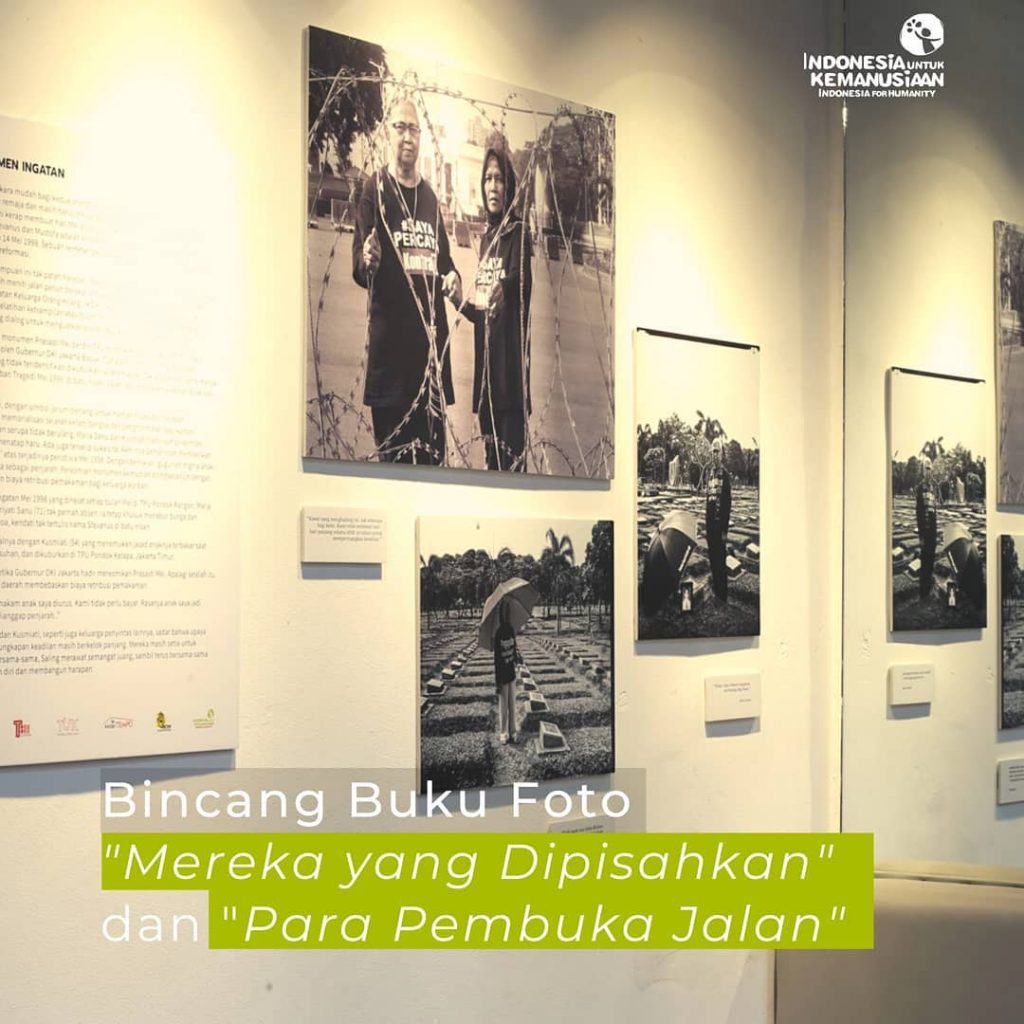
“These two publications change what are figures and statistics into pictures and stories that can be understood and ready by all,” said Erik Prasetya, photographer and pioneer of street photography in Indonesia, during the discussion of two books, Mereka yang Dipisahkan (They Who Have Been Separated) and Para Pembuka Jalan (The Pathfinders), at Kedai Tempo in Jakarta on Saturday (03/07/2020. He is also the curator of these two books that recount the explicit reality of the lives of victims/survivors today and their journey to rehabilitation together with victim organizations, supporters and civil society.
“Through these photographs I try to tell the story of the victims and survivors in a more personal way. I let people see themselves, their expressions and their personal stories, so that everyone can understand that they are no different from us, they are the same,” said Raharja Waluya Jati, the photographer of the book, Mereka yang Dipisahkan. The book, which was published in 2001, tells the stories of the families of the disappeared.
Giving a voice to those who have been silenced by the state is work that must be continued as part of humanitarian efforts. Sharing their voices in the form of photographs can express a thousand feelings and represents an alternative approach to truth-telling and truth-seeking which has remained hidden for decades.
The many interesting photographs in these two books are quite different. If the book Mereka yang Dipisahkan shows the sad faces of those who have been left behind, who haven’t changed, the book Para Pembuka Jalan is more optimistic and portrays the struggle of the survivors to claim their economic, social and cultural rights as victims of past gross human rights violations. Their efforts are based on hard work to soothe the memory and prevent future violations. The discussion of these two books was part of the opening of a photography exhibition, The Pathfinders: Victim’s Honor for National Dignity. If you are interested in the stories of the victims and survivors of gross human rights violations, you can visit Kedai Tempo, Komunitas Utan Kayu, Jl Utan Kayu 68, East Jakarta. This photography exhibition will be on until 2 April 2020.
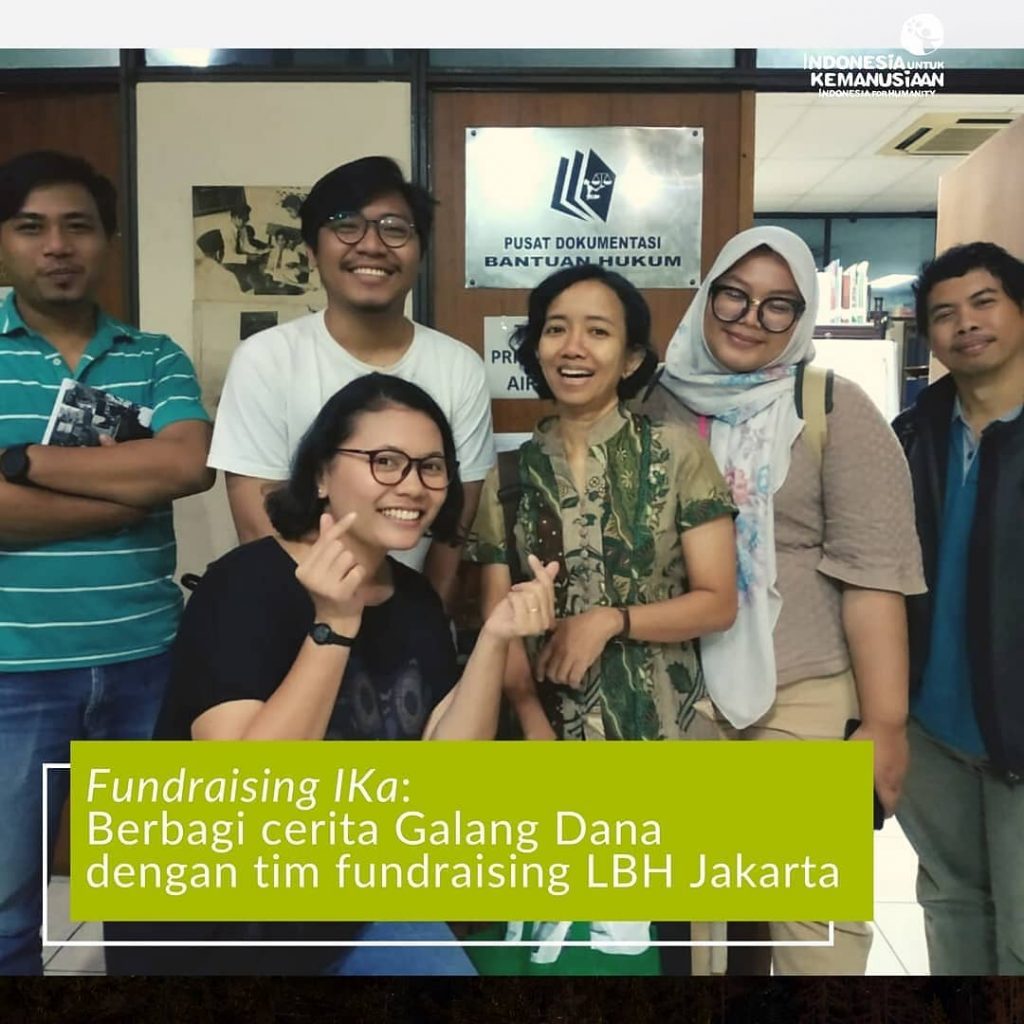
Last Thursday 6 March, we met with the Jakarta Legal Aid Foundation @lbh_jakarta to share and learn from the dynamics of their fundraising team. We learnt a lot, including how to identify potential donors from within our own circle to how to ensure other staff in our organization understand that fundraising activities are not just the work of the fundraising team, but rather are a joint-responsibility.
We also learnt a lot about how to initiate and process donations through the banking system and how to take care of donors that need that personal touch. This personal touch is a very important aspect of fundraising because it builds a friendship which isn’t just about donations but also about sharing an overall vision together.
“This novel breaks the stereotype that violence only happens to the lower classes, to those who are uneducated. Asmara shows that this is not the case,” said Ayu Utami, author of the novels Saman and Larung during the launch and discussion of Switched Off by Hotma Abigail Sirait in Jakarta, on Thursday (20/02/2020).
Switched Off explicitly raises the issue of violence against women in abusive relationships. Asmara, as the main protagonist, is portrayed as a victim of violence: verbal, physical and, eventually, financial abuse.
The event was opened with a short introduction by Hotma Abigail Sirait, the author, followed by welcoming remarks by Maria Anik Tunjung, Executive Director of Indonesia for Humanity (IKa), the organization that manages Pundi Perempuan. In order to deepen knowledge and experience of the audience about cases of violence against women, the book launch invited a number of expert speakers including Ayu Utami (novelist), Vitria Lazzarini Latief (Psychologist), and Yuniyanti Chuzaifah (former Head of the National Commission for Women). Discussion was moderated by Ayu Diah Pasha, a popular Indonesian actor.
Switched Off tells of one of the very many cases of violence against women that are perpetrated in Indonesia. According to the National Commission Against Violence Against Women’s 2019 Annual Report, of the 13,568 cases of violence against women recorded, 9,637 took place in the domestic sphere (71%). Of this figure, 2,073 cases were perpetrated by a boyfriend against his girlfriend and 5,114 by a husband against his wife.
“Switched Off tries to show the initial stages of the vicious circle of violence that women can find themselves in within the domestic setting. If Asmara goes ahead with her wedding, she will be on the receiving end of increasing levels of violence, particularly if Rico, her fiancé, expects her to quit her job. Why increasingly bad? Because in the end Asmara will be dependent on Rico, and Rico will be free to do what he likes to Asmara,” continued Abigail with passion.
Through this novel we are invited to understand the psychological complexity of victims of violence, how they reject the knowledge that their partner is a perpetrator of violence, how the victims believe that one day the perpetrators will change, that just a little patience is needed, and how the victim doesn’t want anyone else to know that their partner is violent.
This understanding is important in order that we know how to react if someone close to us is a victim of violence. According to Vitria Lazzarini Latief, if you suspect that someone close to you is experiencing violence, “you can confirm your suspicions by asking them about it in a non-judgemental way. At least you can give the victim the opportunity to talk about her problems.”
According to Maria Anik Tunjung, once the victim has confided in you, it is important to support them so that they can face their problem and be free from the trauma that they have been experiencing at the hand of their partner.
“Providing the victim of violence with access to rehabilitation from the trauma they have experienced is important. As a resource organization, IKa pushes relevant agencies to provide support to organizations that work on issues of violence against women, such as Women Crisis Centers,” said Anik.
Together with the National Commission for Women, which initiated the establishment of Pundi Perempuan, Ika raises, manages and distributes diverse resources to support women victims of violence, including providing funding to organizations that focus on providing services to women victims of violence in Indonesia.
In addition to addressing the issue of violence within the context of a dating couple, Abigail also intends to contribute to supporting women victims of violence by donating profits from the sale of Switched Off to Pundi Perempuan.
*There are few sculptors in Indonesia and even fewer female sculptors. One of those is Dolorosa Sinaga.*
In 2020, Donorosa Sinaga celebrates 40 years as an artist. An exhibition entitled ‘Dolorosa Sinanga’s 40-Year Kaleidoscope of Art Activism,’ was held at the National Gallery, Jakarta. In addition to the exhibition, Dolorosa also published a book about her activism and her art entitled, ‘Dolorosa Sinaga, Body, Form and Substance.’
Dolorosa and Her Men
Humanitarian activists, educator, artist, these are three identities attached to Dolorosa Sinaga. In the exhibition hall stood five male figures. The five figures are the Dalai Lama, President Soekarno, Wiji Thukul, Gus Dur and Multatuli. Gus Dur is posed in the style of a reclining Buddha, showcasing the late president and Muslim cleric’s famous laugh. Poet Wiji Thukul, who was abducted and disappeared for his political activism under the New Order, is depicted reading poetry with his left hand raised. Soekarno, Indonesia’s first president and founding father sits crossed-legged sporting his signature sunglasses. Multatuli, 19th century Dutch author and anti-colonial campaigner, is reading from an enormous book and the Dalai Lama is shown relaxed and happy. As a sculptor, Dolorosa works with a variety of materials; as an artist, Dolorosa expresses her ideas freely but firmly. The five men in her exhibition convey an energy and spirit that she shares as an idea of humanity. Dolorosa Sinaga is also one of the initiators of the Turn Left Festival, and has the energy of someone who opposed and exposes New Order propaganda, which must set straight.
Dolorosa and Women
The office of the National Commission Against Violence Against Women in located on Latuharhary Road, Jakarta. Go through the main entrance, turn left and then right. On the left-hand side of the stairs one of Dolorosa Sinaga’s statues is on display. The Statue of Solidarity, a statue of a number of women standing a row, holding hands. The woman of the far-left holds a clenched fist aloft in a symbol of resistance. One of the women is caressing her stomach, she’s pregnant. “Dolorosa is very serious, many of her statues are created in the form of a woman,” said gender rights activist Saparinah Sadli in a statement recorded for the exhibition. She underscored the fact that Dolorosa is an artists that sides firmly with women. “I don’t choose women as subjects, but rather I am inspired by women. Women represent change of life,” said Dolorosa in an interview.
Her support of the women’s movement is not only evidence in her work. Dolorosa is one of the first people who supported the founding of Pundi Perempuan, the only public grant in Indonesia that specifically supports the rehabilitation of women victims of violence, and in particular by supporting organizations that provide services for victims. Pundi Perempuan was initiated by the National Commission for Women in 2001 and later managed in partnership with Indonesian for Humanity (IKa) in its role as grant manager. Congratulations for 40 years of creativity and activism, keep up the good work and continue to represent the spirit of humanity.