Christmas is a time to share kindness and compassion in meaningful ways. From Indonesia untuk Kemanusiaan (IKa), we extend our deepest gratitude to our generous donors for their unwavering support of Si Mbah Penyintas ’65—the elderly survivors of the 1965 tragedy in Indonesia. Through their contributions, we were able to distribute 97 care packages and financial assistance to Si Mbah in Banyumas, Southeast Sulawesi, North Sulawesi, and East Nusa Tenggara.
Many of Si Mbah Penyintas ’65, now in their twilight years, continue to bear the weight of state injustice that marked their youth. In Banyumas, they have formed a close-knit community called “Paguyuban 10 November” (The November 10th Gathering), where they meet monthly, taking turns hosting at one another’s homes or in coffee shops owned by their mentors. These gatherings serve as a therapeutic space, where they sing, dance, and share their stories—finding solace and strength in each other’s presence. To help meet their daily needs, the community also established a Koperasi Simpan-Pinjam (Savings and Loan Cooperative).
Our visit to Si Mbah during the Christmas season was deeply emotional. As we handed them the Christmas gifts, many recalled their painful past as if it had happened yesterday. Some spoke of the stigma that followed them for decades—the way their families were vilified, exiled from their communities, and denied access to education. Overwhelmed with emotion, some broke down in tears, unable to finish their stories.
One of the women, a Si Mbah who remains unmarried to this day, shared how the labels of the past robbed her of the life she once envisioned. Her former fiancé, like many others, refused to marry her, saying:
“You’re a communist, a criminal, from a dishonorable family. I want nothing to do with you or your kin.”
Those words, etched into her memory, became a wound too deep to heal—a trauma that led her to a life of solitude.
Yet, amidst the sorrow, there were also moments of joy and gratitude. Si Mbah Sanjan, one of the survivors, expressed his astonishment and appreciation upon receiving the Christmas donation:
“Thank you, Indonesia untuk Kemanusiaan (IKa), and to all the donors who care for me. I never imagined that people would not only donate but also visit. Usually, the only ones who come to see us are the Witness and Victim Protection Agency (LPSK). IKa, may your mission continue to thrive. It amazes me that the ones who have helped us are ordinary workers—people earning minimum wage—while the government, despite its wealth, has done so little.”
As we celebrate the spirit of giving, IKa mourns the passing of one of the Si Mbah who received a Christmas gift, just weeks later, on January 21st. During our visit, he repeatedly expressed his shock and gratitude that we had come to see him. His words of thanks linger in our hearts, a solemn reminder of how much these small acts of care mean to those who have been forgotten for so long.
We know that no amount of aid can fully heal the wounds of Si Mbah’s past. But our commitment to humanity and justice will remain steadfast, ensuring that they continue to receive support, dignity, and recognition. With the continued generosity of donors, support from the GlobalGiving platform, and the collaboration of other partners, we will persist in standing by Si Mbah Penyintas ’65.
As we reflect on this season of giving, let us carry forward the spirit of solidarity—extending our care not just at Christmas but across all moments of shared faith and humanity. May we never allow indifference to dim the light of Si Mbah’s resilience or let their struggle be forgotten.
In a world grappling with increasing disparities, the role of aid and resources has never been more critical. For years, the global aid landscape has been shaped by an imbalanced power dynamic, echoing remnants of a colonial past. Today, the need for change is undeniable. This is where Indonesia untuk Kemanusiaan (IKa) joins the rally driven by the conviction that it’s time to question the status quo.
Indonesia, like many nations, has long been a recipient of international aid. These well-intentioned efforts, often coming from developed countries, have played a vital role in addressing critical issues such as poverty, education, and healthcare. However, they’ve also perpetuated a troubling narrative, one that has reinforced global power imbalances.
Recognizing the urgency of transforming this narrative, IKa initiated the Forum Belajar Sumber Daya Baru (FAJAR). This visionary initiative serves as a platform for discussions aimed at reshaping the aid and resource landscape within Indonesia. FAJAR’s core mission is to foster diverse, equitable, and sustainable development resources in Indonesia, thus disrupting the longstanding pattern of top-down aid.
FAJAR is not a solitary endeavor; it is part of a broader global movement that seeks to “Shift The Power.” This movement advocates for a more balanced approach to aid, one that values local knowledge, perspectives, and leadership. With the support of the Global Fund for Community Foundations (GFCF), FAJAR is on a mission to amplify the voices and experiences of Indonesian civil society organizations (CSOs) concerning aid and resources.
The inaugural FAJAR discussion took place virtually on 20 September 2023. Among the distinguished panelists were Dylan Mathews, CEO of Peace Direct; Kamala Chandrakirana, Chairperson of the Board of Trustees of Indonesia untuk Kemanusiaan; and Lian Gogali, Founder of Institute Mosintuwu.
The topic of discussion was compelling: “The dynamics of power relations in the pursuit of resources that are equitable and sustainable at the international, national, and local levels.” What unfolded was a profound dialogue that exposed the intricacies of an imbalanced system.
There is the urgent need to reform the international system, which often sidelines local organizations. Insights from the discussion unveiled the excuses commonly used to maintain the status quo, from questioning local organizations’ capacity to the risks associated with direct funding.
While aid was aimed to realize social justice, it sometimes backfired to the communities they wished to serve. It’s crucial to recognize that aid has often been perceived as an act of charity, a well-intentioned gesture, rather than a pursuit of social justice. This perspective has profoundly influenced the aid models in place. Under this lens, aid recipients were often seen as either lacking in strength or entangled in conflicts.
These aid models have inadvertently contributed to the erosion of local knowledge. This erosion is discernible in the aid mechanisms themselves, the procedural aspects, and the thematic focus of various programs, such as training and workshops. The framework through which aid was disseminated operated on the assumption that local populations possessed insufficient or irrelevant knowledge. Local wisdom was consistently marginalized, considered inconsequential.
Central to the discussion was the concept of decolonization, a term not universally embraced but undeniably pivotal in describing the transformation needed in aid practices. Decolonization, in this context, goes beyond critiquing former colonial powers. It’s about dismantling neo-colonial worldviews, which portray the Global North as possessing knowledge while casting the Global South as helpless.
While the discussion highlighted the pervasive problems, it also inspired hope and a call to action. Decolonization, as emphasized, involves naming racism as a problem and dismantling neo-colonial attitudes. It demands a complete transformation of the sector, with local organizations taking the lead.
A critical shift is needed in the discourse surrounding aid models. This shift should prioritize understanding the intricacies of the local context before anything else. Regrettably, these models have also given rise to a new elite class, primarily benefiting from unequal access to resources and opportunities. This bias towards a specific social class has excluded grassroots communities from active participation. Their valuable knowledge and unique perspectives have been unjustly sidelined when designing aid programs.
The structured disbursement of aid has engendered broader cultural and attitudinal changes. It has instilled a pervasive materialistic outlook, altering social relationships and values. This transformation is a direct result of how aid was systematically distributed and ingrained in the culture.
The localization approach is seen as a step in the right direction, aiming to transfer more funds directly to local organizations. However, critiques have arisen, arguing that it has become more about metrics and funding mechanisms than addressing power dynamics and structural racism. The focus should be on investing in local organizations rather than merely converting existing initiatives into a localized format. A decolonized sector, it was agreed, would ultimately be a transformed one, with power lying in the hands of local organizations.
However, this transformation is easier said than done. The inertia of large bureaucracies and the uncertainty surrounding the path forward have led to a form of paralysis in the sector. The challenge now is to translate intentions into meaningful actions. It was clear that conversations about aid and decolonization shouldn’t be monopolized by Global North organizations. Global South organizations must have a voice in shaping the narrative.
The discussion proceeded on the second day to convene representatives of Saya Perempuan Anti-Korupsi (SPAK), Yayasan Bina Swadaya, Mama Aletha Fund, Aliansi Masyarakat Adat Nusantara (AMAN), Roemah Inspirit, Lembaga Bantuan Hukum Jakarta (LBH Jakarta), and Indonesia Corruption Watch (ICW).
At the heart of this intricate discourse lay a fundamental question: as new channels for accessing resources emerge, how do they influence the autonomy and agency of these organizations?
Over the course of the discussions, diverse experiences and strategies came to the fore. Some had ventured into resource mobilization, pioneering social enterprises and public fundraising efforts. Others navigated the complex web of global donor funding.
For advocacy-oriented CSOs, particularly those engaged in battling corruption, securing funds from foreign donors could be an arduous endeavor. The asymmetrical power relations inherent in this process often meant grappling with external influences and interference. Even the terms of engagement, embedded in contractual agreements, could be wielded as tools of intervention by donors. This left CSOs walking a precarious tightrope between fulfilling their missions and complying with external expectations.
The transition to social enterprise, a promising avenue for sustainability, necessitated the development of a new skill set. Beyond the realms of advocacy, managing businesses and marketing products demanded a different expertise. The harmonization of these two seemingly divergent paths became crucial for CSOs seeking both financial viability and social impact.
In essence, the discussions shed light on a profound reflection: power and resources are inseparable bedfellows. While the landscape of resource access for CSOs is evolving, the critical need for vigilance remains. The influx of new avenues must be met with discernment to ensure that organizational sovereignty is not eroded but fortified.
This captivating dialogue was not merely an exploration of past experiences and present challenges; it was a collective rumination on the future. It was an acknowledgment that the transformation of the aid ecosystem must go hand in hand with the revitalization of resource management. Power dynamics must shift, and CSOs must be empowered to chart their destinies. This process is fraught with complexities, but within these complexities lie the seeds of change. The world of aid is evolving, and in this evolution, there is hope for a more equitable and sustainable future.
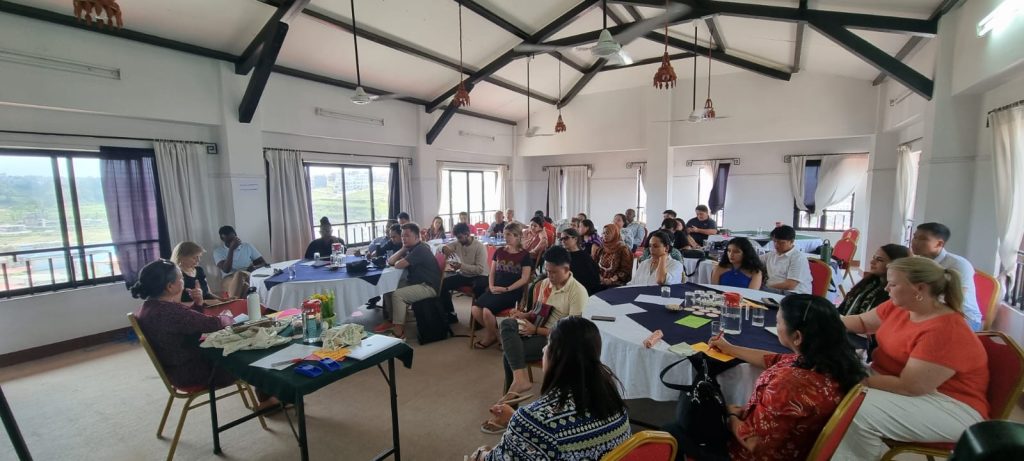
#ShiftThePower Peer-learning Event by the Global Fund for Community Foundations (GFCF), held at Tewa Center, Kathmandu, Nepal in May 2023, was attended by philanthropic actors from various countries.
The GFCF #ShiftThePower peer-learning event held at the Tewa Center in Kathmandu in May 2023 was a diverse assembly of philanthropic actors hailing from various corners of the world. Unbeknownst to me, as I stepped into this dynamic space, it ignited a profound odyssey of introspection and rigorous scrutiny of power dynamics within the realm of philanthropy. The event’s discussion and insights proved to be a thought-provoking experience, stimulating me to re-evaluate my preconceived notions regarding the significance of an organization such as mine – Indonesia untuk Kemanusiaan (IKa for short, and in English Indonesia for Humanity) – in our capacity as a civil society resource organization.
The event served as a revelation, shedding light on the frequently disregarded power dynamics that are deeply ingrained in intermediary organizations. It implored us to meticulously unravel the intricacies and conscientiously evaluate our influence on the communities we cater to. We found ourselves compelled to ponder whether our well-meaning endeavours inadvertently uphold a narrative that deprives local communities of their autonomy and resources. It became clear to me that we must relinquish this stigmatization and cultivate a milieu where communities are acknowledged as proactive agents of change and decision-makers in their own regard.
The discussions too underscored the pressing imperative to transcend conventional donor-recipient dynamics and to re-conceptualize partnerships as equitable collaborations. We have to cast off the lens of external presumptions and embrace a more nuanced approach. We ought not to impose prescriptive solutions, but rather be committed to active listening, adaptation, and support. The conversations underscored the significance of acknowledging that communities inherently possess their own knowledge, resources and capabilities. All too frequently, these invaluable assets go untapped, hindered by external perceptions that portray communities as being devoid of agency or resources. It is by deconstructing biases and power structures that we can pave a fresh path toward the genuine empowerment of communities.
Nurturing localization and ownership poses its fair share of challenges. It necessitates humility and a steadfast dedication to sustained involvement. However, the rewards are profound: a philanthropic landscape that is both equitable and sustainable, empowering communities to become the architects of their own development.
As participants from diverse backgrounds and philanthropic fields shared their experiences and insights, a shared comprehension materialized – that Southern civil society possesses the tremendous capacity to defy, shape and forge a fresh framework of authority and unity. However, in order to grasp this notion, we must transcend the limitations of conventional gathering spaces and authentically embody the ideals we strive to uphold. Merely engaging in discussions and formulating strategies falls short; we must behave like a movement in action.
To embody the essence of a movement, we must go beyond mere passive participation. In order to truly make a difference, we must exhibit a willingness to step outside our comfort zones, challenge the status quo, and rally others to join us in our pursuit of justice and equity.
As a citizen of the Global South, I believe that we bear a distinctive obligation to propel this movement onward. It is imperative that we tap into our collective power, utilizing the richness of our varied expertise and experiences to push for meaningful transformation. The change we strive for cannot be entrusted solely to external actors or institutions. Instead, we have to take responsibility for our destinies and emerge as agents of transformation in our own regard. It entails harnessing our networks, both online and offline, forging connections, exchanging resources and cultivating cooperation. It is important that we do not shy away from confronting deeply ingrained systems and structures that perpetuate both inequality and exploitation.
We shall draw inspiration from the historical currents that have shaped our world, from the battles for civil rights to the relentless struggles against colonialism and systemic oppression. These movements were propelled by everyday individuals who rejected the prevailing order and dared to imagine an alternative future.
Ultimately, the focus extends beyond IKa or any solitary institution. It encompasses a collaborative endeavour that surpasses geographical boundaries and empowers the communities we are dedicated to supporting.
None of us simply exists as passive participants in the grand scheme of things; for we are the catalysts of change and the architects of our own progress.
This article is a reflective piece from the GFCF Peer-learning Event on the #ShiftThePower movement. It is also published in English and can be accessed on the GFCF website.
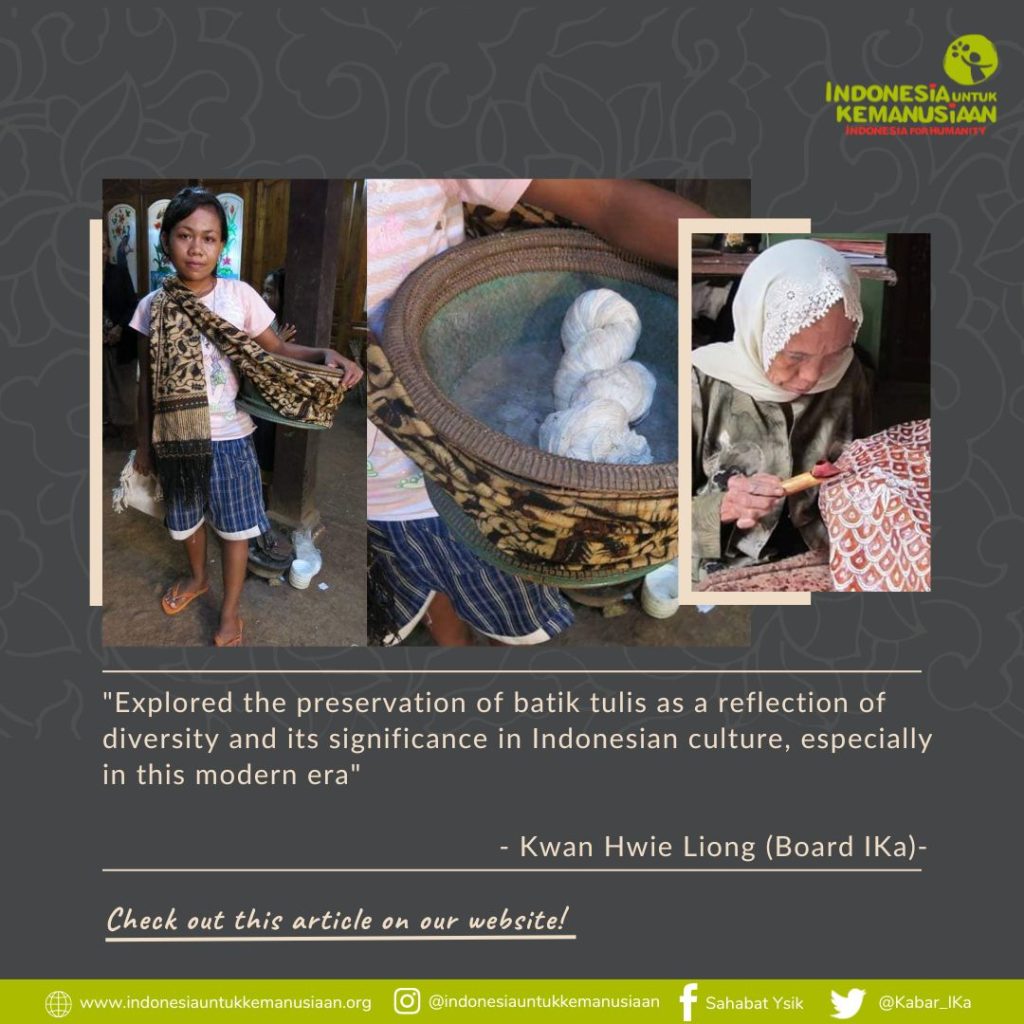
Tulis as a Form of Diversity, Sustainability, and Local Wisdom,” a cultural discussion held last Friday (14/4). The discussion was designed by Humaira Sentosa, Prysafella Deviena, and Tariska Salsabila, three University of Indonesia students currently conducting practicum at IKa. Ngulik Budaya was held online via Zoom and featured Kwan Hwie Liong (William Kwan), the Director of the Institut Pluralisme Indonesia/Institute for Pluralism in Indonesia (IPI) and an observer of batik.
In recent years, there has been a renewed focus on preserving batik tulis as one of Indonesia’s cultural identities. “Ngulik Budaya” emerged as a response to the struggle of batik tulis to remain relevant today. This is because batik tulis now has to compete with fast fashion trends and the demands of the industry for faster and cheaper production methods. William Kwan explored the preservation of batik tulis as a reflection of diversity and its significance in Indonesian culture, especially in this modern era.
William explained that every region in Indonesia has a unique style of batik, reflecting local culture, history, and natural environment. The use of batik is not limited to clothing, as it is also used for various purposes such as decoration and religious rituals. Batik motifs can vary from simple geometric designs to complex narrative scenes, each with its own symbolism and meaning.
The welfare of batik craftsmen is closely linked to the preservation of batik as a cultural heritage. These craftsmen inherit the tradition of making batik designs from their ancestors, and their livelihoods depend on their ability to continue practicing this craft. The emergence of mass-produced textiles poses another challenge for batik craftsmen. Therefore, the sustainability of the batik craftsmen community is also a focus of this cultural discussion.
However, William revealed the reality that most batik makers only receive wages in the tens of thousands of rupiah each month. This is certainly not commensurate with the fact that batik makers are cultural heroes who play an important role in preserving Indonesia’s cultural heritage.
William saw that one reason for the low wages of batik makers is the lack of research to understand the demand and market interest where batik is developed. “Until now, the production of batik and wages at the local level have not been closely related to the larger market, whether in Indonesia or abroad. For example, in Sweden, what do people like, and what pattern are they interested in? If we can understand that, then our batik can have high value,” he said.
In addition, William noted that the low wages of batik artisans could have an impact on the interest of young people in becoming the next generation of batik artisans. Therefore, the government needs to make efforts to map out potential regions for batik’s markets and study the preferences and demands of the markets in those areas. From there, plans can be made to develop batik that can attract young people to get involved in the industry.
Nevertheless, efforts to cultivate an interest in batik can also be initiated even if the government has not yet taken action. One way is to utilize the current trend of young people attending workshops, particularly in urban areas. Workshop organizers can hold classes on batik making. This way, young people not only satisfy their desire to try something new but also participate in cultural preservation. Eventually, when their love for batik has taken root, transforming that passion into a source of income will become more open. “The hope is that batik can become one of the sources of income for young people,” said William.
IKa, as a civil society resource organization, supports the sustainability of batik makers and preservation activists. This cultural discussion is also an invitation to donate through Pundi Budaya, a resource mobilization program by IKa dedicated to supporting artists, activists, and defenders of culture and diversity.
“Specifically at IKa, we have the Pundi Budaya program, so hopefully through proactive activities, we can encourage the preservation of batik and other Indonesian cultural heritage. Our hope is to develop an empowered community, including in the field of batik,” said William.
Batik-making is not only an art form; it is also a reflection of Indonesia’s cultural diversity. In addition to maintaining the sustainability of batik makers, preserving batik is also necessary to ensure that future generations can still witness the beauty of batik and celebrate Indonesia’s cultural diversity.
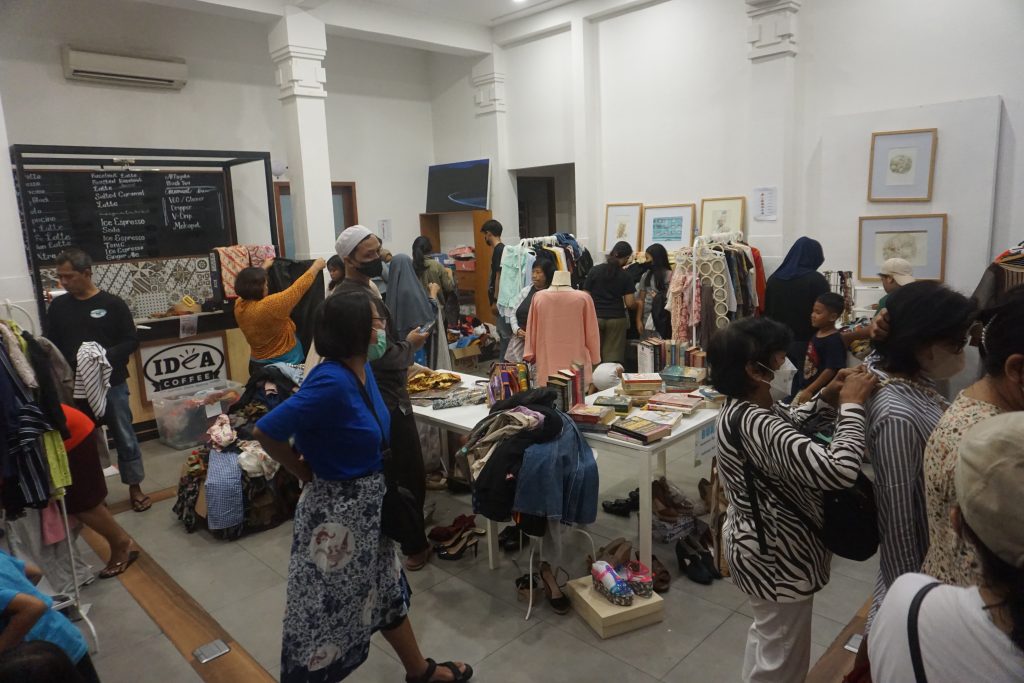
Give Back Sale is more than just a fundraising activity. It has become a symbol of unity, compassion, and resilience. From its humble beginning in 2016, Give Back Sale has grown into a force for change. To date, we have successfully organized nine offline Give Back Sale events.
During the COVID-19 pandemic, we adapted to the restrictions by transforming the Give Back Sale into an online fundraising event. From 2020 to 2022, we successfully held 12 online Give Back Sale events. Through live sales on IKa’s Facebook page, we engaged with viewers and provided an opportunity for donors from other cities to participate and support the cause.
In addition to the online Give Back Sale events, we established a virtual shop on Instagram, providing another avenue to promote and sell preloved items. This digital platform allowed us to reach a wider audience and extend our support to women victims of violence beyond the physical confines of our offline events.
For the last three years, Give Back Sale, both online and offline, managed to raise Rp262.850.670 of funds.
Sources of Give Back Sale Preloved Goods
Through the collective efforts of generous donors, Give Back Sale aims to support the Women’s Crisis Centers in their mission to provide legal aid and psycho-social recovery to these brave women.
Give Back Sale is an opportunity for individuals, communities, and corporates to come together and demonstrate their commitment to empowering women and building hope. We value every contribution, no matter how small, as each donation holds the power to transform lives and create a positive impact.
We are grateful for the support and involvement of local communities, such as the religious community in Jakarta, Lajnah Imailah, who embraced our cause. In addition to the community contributions, we have also received valuable donations from renowned companies such as The Body Shop, Blibli.com, and TLScontact. Their compassion and dedication to making a difference have made a significant impact on the success of the Give Back Sale.
Voluntarism Involvement
We are also fortunate to have the invaluable support of dedicated volunteers who form the backbone of Give Back Sale. These volunteers are part of our organization’s Komunitas Penggalang, or Community of Resource-raisers, and come from diverse backgrounds such as women and children activists, students, stay-at-home mothers, and many others. Their efforts behind the scenes are crucial in creating an organized and smoothly run fundraising event. They work tirelessly to ensure that every donated item is carefully evaluated, categorized, and priced, ensuring that donors can find quality preloved items while supporting a worthy cause.
Executing Give Back Sale
Give Back Sale takes place over three days at Ke:kini ruang bersama, located in Menteng, Central Jakarta. This vibrant provides a welcoming environment for donors.
Give Back Sale attracts a diverse range of donors. However, the majority of our participants are women aged 25 to 45 years old. This enthusiastic demographic reflects the commitment of women to empower each other and make a positive impact on the lives of those in need.
At Give Back Sale, we strongly believe in supporting women empowerment and entrepreneurship. As part of our commitment, we invite women entrepreneurs who offer goods or services to showcase and sell their products at our event. This collaboration not only provides a platform for them to grow their businesses but also strengthens the network of women empowerment supporters. Some examples of women entrepreneurs who have participated in Give Back Sale include tarot reading, beauty class, and yoga class.
Maximizing Impact: Reducing Waste and Empowering Communities
After the execution of the Give Back Sale, we often find that there are some leftover preloved items that have not been sold. To ensure these items are not wasted, we have implemented two approaches to reduce or eliminate them.
The first approach is through donations or handing over the items to other organizations that conduct similar events like Give Back Sale. This not only benefits the organizations by providing them with inventory for their events but also contributes to the overall goal of supporting various causes and initiatives of civil society organizations.
The second approach involves giving the leftover items to disadvantaged individuals or communities in the vicinity of the Give Back Sale location. This extends the lifespan of the items and helps other communities.
Through these initiatives, we demonstrate our dedication to responsible and thoughtful resource management. Together, we can make a difference by giving back to the community and promoting a culture of compassion and support.
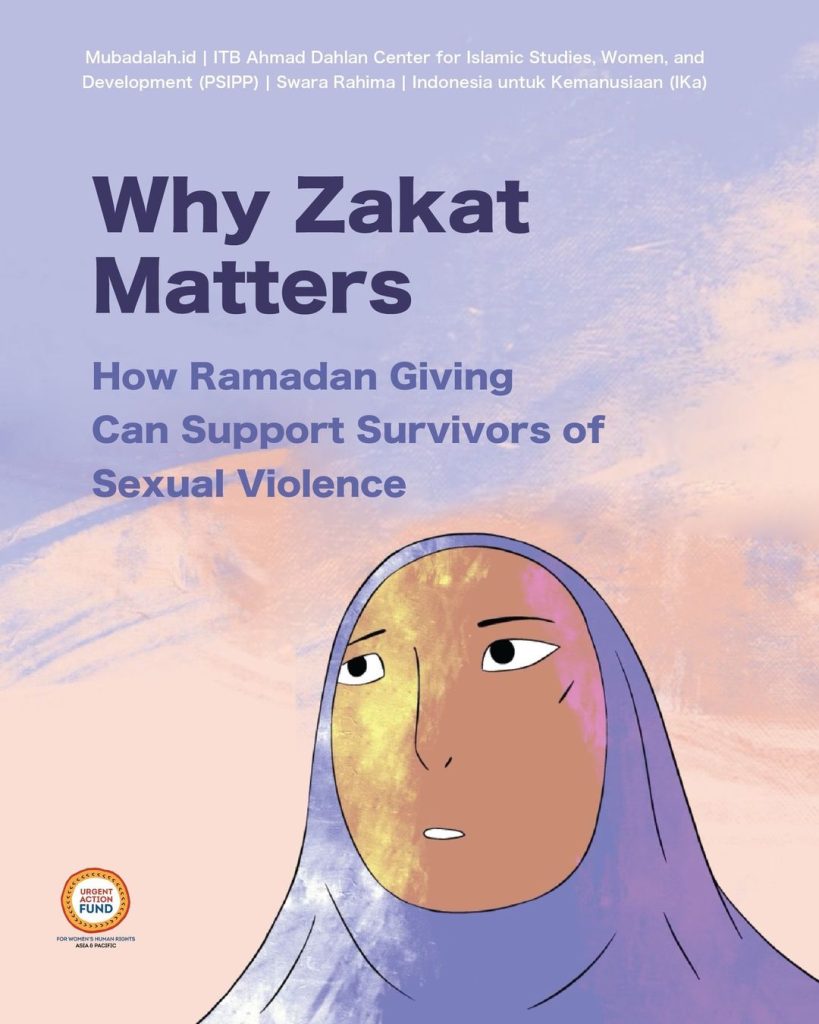
Indonesia for Humanity (IKa) collaborates with Mubadalah.id, Pusat Studi Islam Perempuan dan Pembangunan (PSIPP) at ITB Ahmad Dahlan, Swara Rahima, and the Urgent Action Fund, Asia & Pacific (UAF AnP) to campaign for women victims of violence being among the groups eligible to receive zakat.
For zakat payments for women victims of violence, please access the information here.
This article is written by Mubadalah.id in Indonesian and can be accessed through this link.
–
Given the dire condition of female victims of gender-based violence, donating zakat could serve as a crucial solution to aid these women.
On Monday, March 20, 2023, Mubadalah.id collaborated with the ITB Ahmad Dahlan Center for Islamic Studies, Women, and Development (PSIPP), Swara Rahima, and Indonesia untuk Kemanusiaan (IKa) to organize a webinar titled “Ramadan 2023, Zakat, Peduli Perempuan Korban Kekerasan”. This event served as one of the campaigns in a series of zakat fundraising efforts aimed at supporting victims of sexual violence during Ramadan month.
As stated in the committee’s opening remarks, the purpose of this webinar was indeed to raise public awareness about the importance of zakat for women victims of violence and to explore how zakat can be utilized to provide support, attention, and assistance to women who have experienced violence.
As noted in the 2022 Annual Report by the National Commission on Violence Against Women (Komnas Perempuan), there were 457,895 cases of violence against women in Indonesia. These types of violence ranged from sexual, physical, and psychological violence to economic neglect, human trafficking, exploitation, bullying, and more.
Even in several studies, it has been revealed that many women victims of violence receive minimal support and have limited access to protection. As a result, they become extremely vulnerable, experiencing multiple layers of violence.
In her article titled “Ramadan Momentum: Promoting Zakat for Victims of Sexual Violence”, Yulianti Muthmainnah mentions that the fate of women victims of violence is still very concerning. They suffer permanent damage to their reproductive organs, decaying uterus, physical wounds that do not heal, disabilities, prolonged stress, and trauma.
Even worse, many of them end up dying due to depression. To make matters worse, the state-owned Health Care and Social Security Agency (BPJS Kesehatan) refuses to cover the cost of treatment and recovery for sexual violence victims, claiming that what they experience does not fall under the category of ‘illnesses covered by BPJS Kesehatan’.
Given the dire condition of female victims of gender-based violence, donating zakat could serve as a crucial solution to aid these women.
Understanding Zakat
In her book “Zakat for Victims of Violence against Women and Children”, Yulianti Muthmainnah states that the term zakat linguistically means blessing, purity, goodness, growth, and increase. By paying zakat, it is hoped that one’s wealth and soul will become purified and their livelihood will prosper.
Zakat, a form of religious charity in Islam, serves as a social act of worship that hones sensitivity and concern for fellow human beings. It aims to alleviate hunger, poverty, and economic and social deprivation among the less fortunate.
Islam prescribes eight distinct groups as eligible recipients of zakat, which include the impoverished, the needy, those tasked with the collection and distribution of zakat (amil), recent converts to the faith (mu’allaf), those seeking to liberate themselves or others from slavery (riqab), debtors struggling to repay their loans (gharim), those fighting for the sake of Allah (fi sabilillah), and travelers who are stranded and in need of assistance (ibnu sabil). This is unequivocally laid out in verse 60 of Surah at-Taubah:
“The alms are meant only for the poor and the needy and those who are in charge thereof, those whose hearts are to be reconciled, and to free those in bondage, and to help those burdened with debt, and for expenditure in the way of Allah and for the wayfarer. Allah is All-Knowing, All-Wise”. [9:60]
Yulianti’s Views on Zakat for Women Victims of Violence
Yulianti asserts that the obligation to pay zakat, whether it be zakat fitrah or zakat maal (wealth), is an unequivocal commandment. In terms of this unequivocality, there is no need for ijtihad, or independent reasoning, when it comes to the verses pertaining to zakat. This is because the time frame for its implementation has already been established, as well as the minimum threshold for when zakat becomes obligatory to pay.
However, in her view, ijtihad (independent reasoning) must still be carried out to apply the maqashid al-shariah aspects of zakat verses. This way, the Islamic legal system we use will be in accordance with the maqashid al-shariah, the progress of time, and the needs of society. Therefore, the ijtihad on how to promote zakat for victims of sexual violence is crucial.
In light of Surah At-Taubah verse 60, which specifies that there are eight categories of individuals eligible to receive zakat, Yulianti believes that we must reconsider our interpretation. It is possible that the circumstances of the needy, the destitute, those in bondage, and those striving in the path of Allah today differ from those in the past. Therefore, it is important to draw analogies in order to expand the meaning of zakat recipients.
For instance, in understanding the impoverished class. Presently, we can liken those living in poverty to women who are victims of sexual violence and subsequently withdraw from social circles. This state of affairs arises from the stigma we attach to them, labeling them as unclean, dishonorable, impure, and carriers of shame.
In addition, we can also liken this to victims of sexual violence who are expelled from school due to pregnancy, fired from their job, expelled from their family, community, or other places of residence. As a result, they face difficulties in processing their case and recovering their mental health.
The Significance of Acknowledging Women’s Distinct Experiences
During a webinar titled “Ramadan 2023, Zakat, Peduli Perempuan Korban Kekerasan,” Nur Rofiah mentioned that women who are victims of sexual violence are particularly vulnerable in various ways, including economically. These women often experience mistreatment from their surrounding environments, ranging from their families, schools, workplaces, hospitals, and other public places, especially those who have experienced unwanted pregnancies.
In addition to struggling to process cases and recover from trauma, she also has to finance the baby she is carrying. From the costs of pregnancy and childbirth to the process of raising the child.
According to Nur, in promoting zakat, it is important to consider women’s unique experiences. This includes their biological experiences (menstruation, pregnancy, childbirth, breastfeeding, and postpartum recovery) as well as their social experiences (marginalization, subordination, stigmatization, double burden, and violence).
Through this awareness, female victims of sexual violence can be categorized as eligible for zakat (charitable donation in Islam), due to their vulnerability in economic matters. Therefore, they are obliged to become zakat recipients.
On the other hand, Yulianti also mentioned that by including women in the category of zakat beneficiaries, it can reduce the burden experienced by sexual violence victims. They will not face obstacles in paying for medical examinations, treating physical injuries, and healing from prolonged psychological trauma.
Let us show care for victims of sexual violence by campaigning, channeling, and promoting alms-giving for them. May Ramadan bring blessings to us all, including women who have suffered from sexual violence.
Article published by PBH Nusra (NTT). Author: Yulius Regang
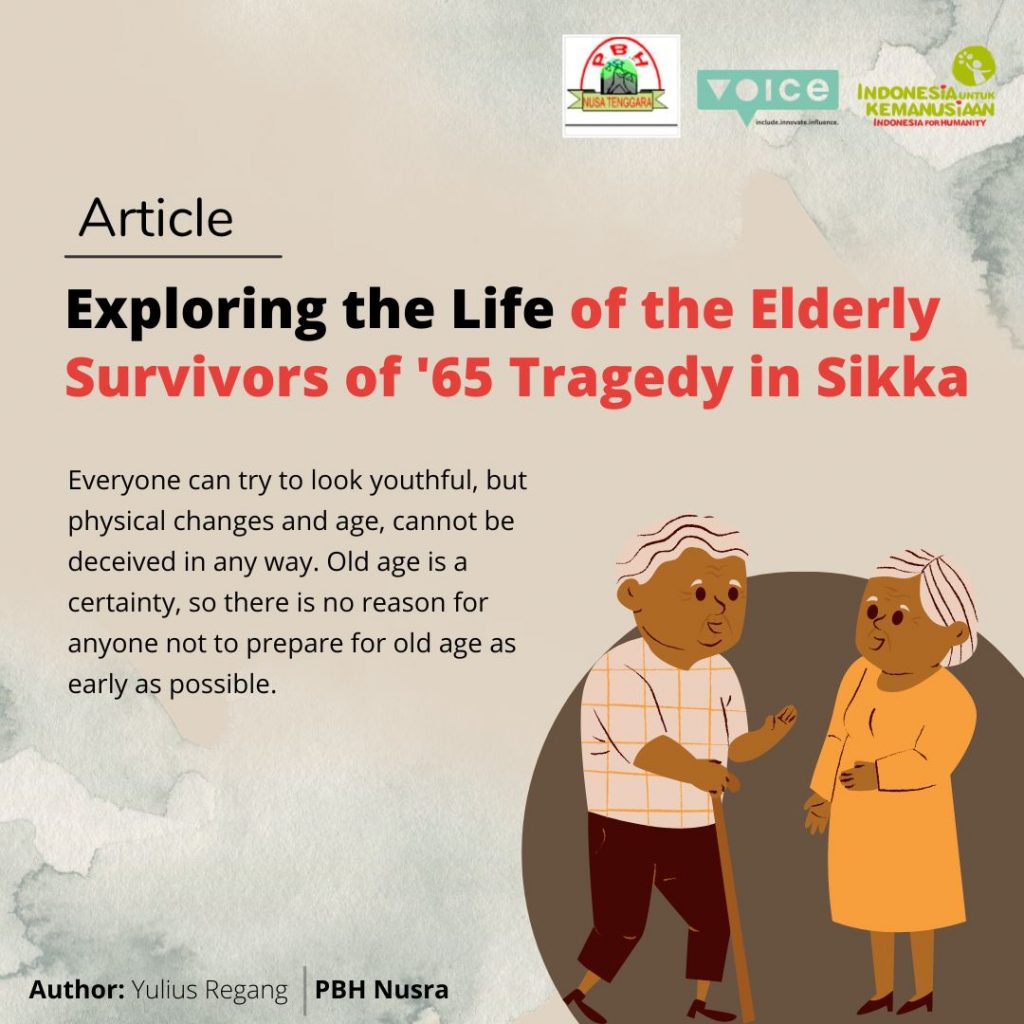
Getting old is not an option, but a cycle of life experienced by every human being. No one in this world can escape old age. Everyone can try to look youthful, but physical changes and age, cannot be deceived in any way. Old age is a certainty, so there is no reason for anyone not to prepare for old age as early as possible.
In fact, humans tend to ignore one phase in the life cycle, namely old age. People tend to overdo their youth and forget to prepare for old age. This is very real in the lives of local people in general. They spend their time with routine jobs until they forget to take care and prepare for the future properly. As a result, many elderly people cannot enjoy the rest of their lives properly and are far from prosperous. Situations and conditions that do not support also exacerbate the situation so that many elderly people experience violence and are abandoned by their families.
This condition automatically places the elderly in a helpless position because physically they are no longer strong, their immune system begins to weaken, eye function begins to blur, hearing no longer functions normally, memory begins to weaken, and various types of diseases come and go. This situation is experienced by the elderly survivors of 65.
The elderly assisted by PBH-Nusra are a group of survivors of past serious human rights violations that spread across three assisted villages: Ian Tena, Tua Bao, and Natarmage. There are 109 elderly people being accompanied. This number continues to decline from time to time because many elderly people are helpless due to age and illness.
For years the survivors lived in fear and are reluctant to open up to outsiders. They include people who experience layers of stigma and discrimination, are neglected, and do not get a good space in society. They find it difficult to express themselves because of stigma and discrimination. PBH Nusra seeks to restore their dignity by opening spaces for inclusion and fighting for the rights of the elderly to obtain services and social assistance from the state.
PBH-Nusra also involves young people as volunteers who are ready to help the elderly access basic services, especially in the health sector such as Posyandu (integrated service post) for the elderly, Supplementary Food Provision, and conducting home visits.
PBH-Nusra also tries to build meeting spaces that involve multi-stakeholders, including the government, the community, the elderly, young people, organizations, and individuals who care about the elderly. Small actions are carried out to give attention to the elderly and raise a sense of community concern, especially by the youth group towards the elderly. The problem faced by the elderly is not solely the responsibility of the state or government but is a shared responsibility.
All elements of society need to give attention and support to the elderly in accessing basic services and social assistance. Meanwhile, the government is obliged to ensure that the budget and work programs are in accordance with the needs of the community.
Good cooperation between the community and the government will result in the welfare of the elderly. In improving health and social services for the elderly, PBH-Nusra collaborates with Indonesia for Humanity, which is supported by Voice Global through the “Better Together” program in accordance with the mandate of Law Number 13 of 1998 concerning Elderly Welfare.
Solo, a city with a million stories, from bliss to sorrow. The historical periodization seems to be centered in the city of Solo. From various historical stories, the ‘65 tragedy left a scathing wound to this day. This wound still needs a process to heal – and who knows how long. Our reflection was greeted by the heat of the city of Solo. The heat touched our skin as we were hauling our suitcases toward the pick-up vehicle. Some of us, just for the first time set foot in Bengawan Solo.
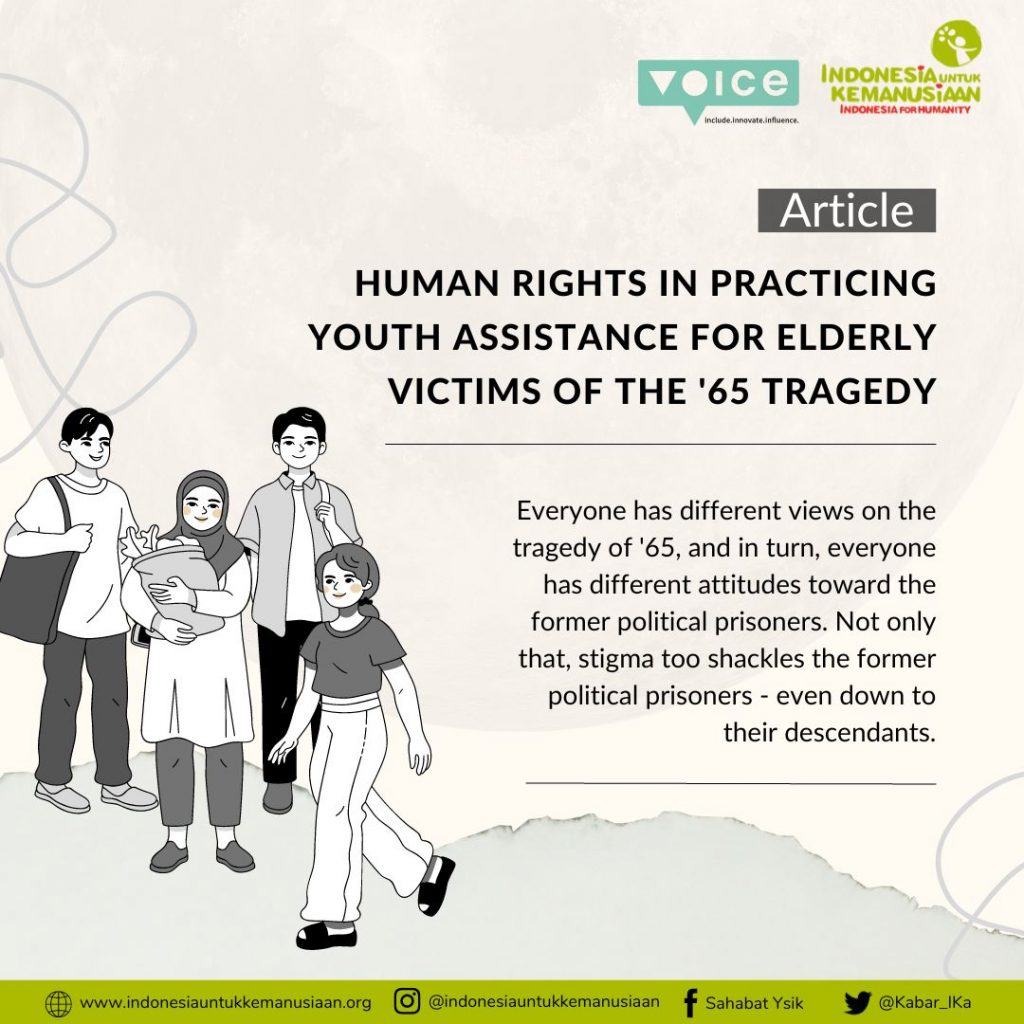
Everyone has different views on the tragedy of ’65. Different views make people have different attitudes towards former political prisoners. Stigma also shackles former political prisoners and even their descendants. In fact, according to our understanding, many former political prisoners are victims of the Old Order regime. They did not get justice even today. The state is negligent in its responsibility to protect its people. It is as if the state turns a blind eye to the fact that many former political prisoners are victims of the regime’s barbarity.
We are still recalling the moment of our visit to Mbah Cokro (not his real name). Mbah Cokro is a Simbah/Mbah (a nickname for grandfather in Javanese) who fights for the rights of the elderly victims of human rights violations. Mbah Cokro is highly respected because of his humanity spirit. Mbah told us how the political victims of the Old Order regime struggled in their lives. A long process was carried out even to make access to limited public services. Of course, opening a sealed door is not as easy as opening an unlocked door. This would describe how the quality of life lived by victims of human rights violations.
Mbah Cokro recounted the efforts that had been made. There are many twists and turns of conflict from the surrounding environment to the state apparatus they face, ranging from the difficulty of accessing green books (books for accessing free medical treatment services to hospitals) to the issuance of a Certificate of Victims of Human Rights Violations from the National Human Rights Commission which states that the state recognizes that human rights violations have occurred against the victim. But from all of these stories, here we will tell about how young people are involved with the elderly and become part of them. Our question to Mbah Cokro was, “What is the strategy that makes young people enthusiastic and willing to be part of the accompaniment work?”
While sipping a cup of coffee, Mbah Cokro began to tell the story of the process of inviting young people to work assisting the elderly victims of human rights violations. The most important thing in the strategy is to understand the character of today’s youth. According to Mbah Cokro, the character of young people today tends to be individualistic and pragmatic. This is due to the advancement of technology so that the culture of meeting each other and discussing is starting to fade. For this reason, the strategy taken is to provide meeting and discussion rooms according to the current situation, namely online.
However, meeting virtually is not easy to make a bonding relationship. For that, it is necessary to conduct offline meetings as well. This was then scheduled for a direct meeting at the Sekber’65 office in Solo. The initial meeting discussed a simple theme about the culture around them. This activity is effective in building curiosity among young people. This process also makes the youth’s background visible. Do these young people have any concern for the elderly victims of ’65 or are they new to this issue? Over time, these regular discussions took place, and several young people committed to attending. As a result, the discussion issues moved to heavier themes such as those related to human rights, democracy, protection for the elderly victims of human rights violations, and so on.
The curiosity of young people turned into empathy which was then formed in the Young Generation Forum (FGM). Mbah Cokro and his friends in Solo brought together young and elderly victims directly. From this, direct conversations and interactions occurred, at first young people only sympathized with the stories and films they encountered on online channels, now it has turned into a sense of empathy.
It did not stop there, the meeting of young people with the elderly became a moment that was never imagined before because these young people were invited to visit the homes of the elderly directly. Starting from the elderly who live alone, are rejected by their families, with economic limitations, suffering from certain illnesses, to the elderly who directly receive disabilities due to past tragedies. Not infrequently they (young people) are invited to visit the graves of the elderly who have preceded us.
The empathy that continues to grow makes young people in Solo want to join and become part of FGM. These young people do voluntary work to help the elderly victims, namely by providing assistance for control or check-ups at the hospital, home visits accompanied by a facilitator, to picking up elderly victims if they are not present or cannot be contacted. The humanitarian work of these young people illustrates that young people are not a generation that is indifferent to others, but young people are a generation that cares about others, especially the marginalized.
The activation of young people who are members of FGM changes the view that young people are an individualist and apathetic group. Young people have empathy which if managed properly can be a burning ember for the human rights struggle. Moreover, physically young people have strong stamina. On the other hand, along with the digitization of public services that the government is currently expanding to the regions, the performance of young people who are adaptive to technology is urgently needed. Collaboration between young people and supporting organizations is very good in the work of the human rights struggle.
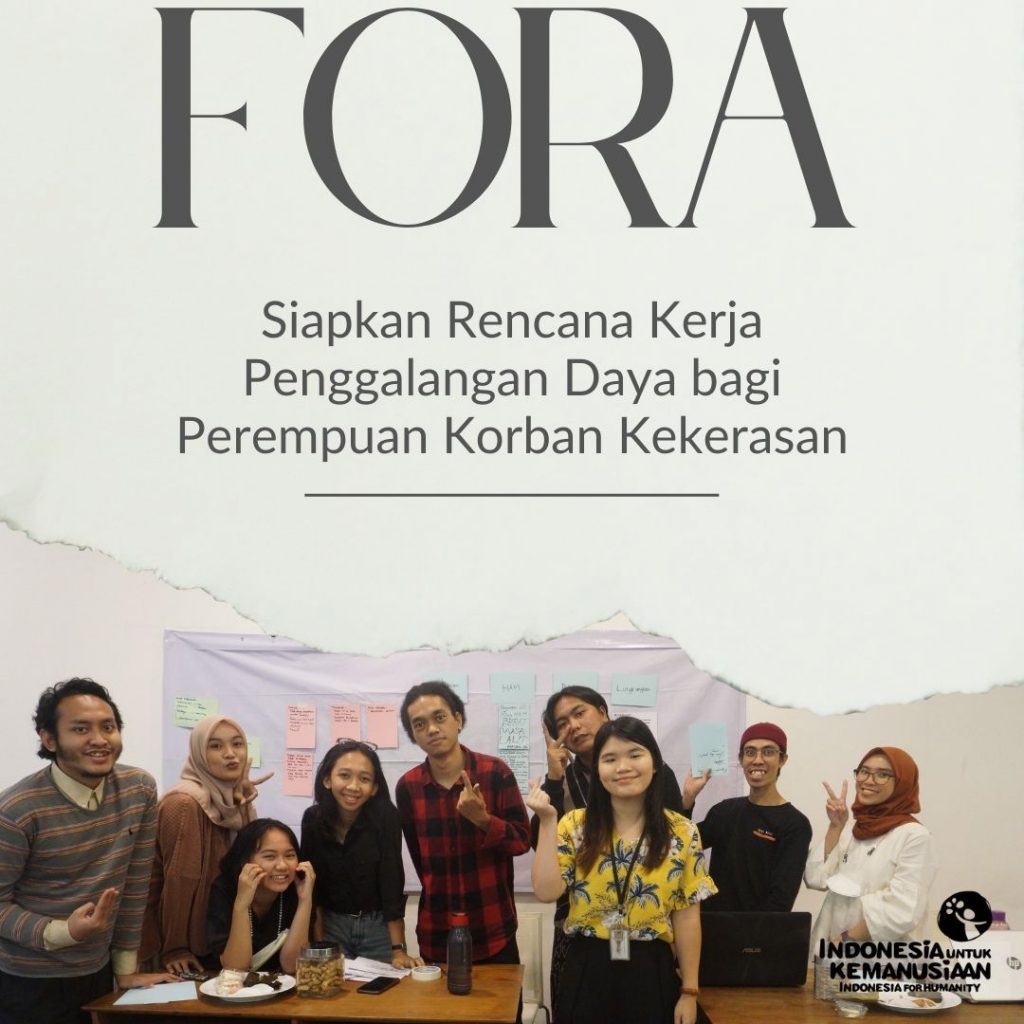
Forum Solidaritas Anak Muda untuk Kemanusiaan / Youth Solidarity Forum for Humanity (FORA) had a reconvene to discuss their work plan for one year ahead. The discussion took place at Ke:kini Coworking Space, Cikini, Menteng, Central Jakarta on Tuesday (23/08/2022). Indonesia untuk Kemanusiaan / Indonesia for Humanity (IKa)’s Executive Director, Sugiarto Arif Santoso, was also present to oversee the discussion.
FORA works as ‘IKa’s Youth Community Supporter’ through collaborating with other youth communities in the Greater Jakarta area. FORA aims to achieve inclusive and equitable youth participation and leadership in society. As a part of the ecosystem and an extension of IKa, FORA is to carry IKa’s values in conducting their works.
Out of the discussion, it was decided that FORA will put their focus to work on sexual violence issue and cultural sustainability issue. The issue of sexual violence in particular will prompt the establishment of a Standard Operating Procedure (SOP) and a Sexual Violence Prevention and Handling Task Force / Satuan Tugas Pencegahan dan Penanganan Kekerasan Seksual
(Satgas PPKS) at three universities in the Greater Jakarta area. The selection of this issue is with reference to the implementation of Permendikbud 30/2021 for universities to form sexual violence task force. Whilst for cultural sustainability issues, FORA focuses on the sustainability of an artist community to be able to continue performing post-pandemic.
Believing in ‘strength in number’, FORA will garner more participation from youth communities in the Greater Jakarta area to work together to realize FORA’s vision. FORA is set to engage university students to promote the forming of SOP and Satgas PPKS at chosen universities and other young people with concern for art-performing community sustainability.
Young people who will be future members of FORA will be provided with training on issues of human rights & democracy, gender & social inclusion, fundraising, as well as campaigning & writing, by the current FORA members who previously had also been trained on similar topics. In order to solidify the preparation of FORA members to carry out their mission, IKa will provide another workshops on facilitation techniques, creative thinking, up to advocacy.
Not only will FORA be providing community assistance and support in the form of training, FORA is also to raise funds for sexual violence crisis center at universities and for art- performing community to remain sustain.
His passion for organization led young Sumiyati to become the youngest Gerwani secretary in the Klaten area. His small posture makes him agile, agile and makes it easy to carry out all organizational activities. Happy and full of joy at that time. However, he didn’t think that his passion for organization had made him suffer for the rest of his life.
Sumiyati was jailed at the age of 17 on charges of being a member of a banned party. In detention Sumiyati also received various kinds of torture, both physical and psychological. This is what forges Sumiyati’s personality into a formidable heroine who firmly works on behalf of humanity.
A bit of the life story of Sumiyati, one of the victims of serious human rights violations in the past, the tragedy of 65/66 can be the best example for those of you who want to be involved in humanitarian work, one of which is through the #bettertogether program in collaboration with Sekber’65 and IKA supported by VOICE.
For the full version of Sumiyati’s inspirational story, you can visit the Sekber’65 website at www.sekber65.org.
Or you can buy a book on the life journey of Sumiyati and other tough heroes.