Jakarta-Since the Covid-19 pandemic spread across the globe, violence against women has increased significantly (UN Women, 2020). The UN has stated its concern and requested that its member countries implement policies that prioritize the protection of women as part of their response to the Covid-19 pandemic, including Indonesia.
In its 2019 End of Year report, the National Commission for Women released figures indicating that a number of regions have seen an increase in cases of violence against women, from 406,178 cases in 2018 to 431,471 cases in 2019. It is expected that cases of violence against women will continue to increase significantly during the Covid-19 pandemic.
Since the implementation of social-distancing policies, organizations providing services to women have seen a change in the way cases are reported, namely through telephone and email. This means that providing services and support to women is highly dependent on women’s access to communication and protection throughout the period of social distancing. This situation means that organization providing services to women feel unable to provide optimal legal and psychological support.
To respond to the needs of support organizations and women’s crisis centers and enable them to to provide legal and rehabilitation services to women victims of violence, Indonesia for Humanity together with the National Commission for Women under the umbrella of the Pundi Perempuan fund will raise public donation online under the theme, “We are in this Together. Let Us Protect One-another”. The fundraising campaign will be launched with an online talk show.
As part of the efforts to support service providers and women’s crisis centers, Indonesia for Humanity (Ika) and the National Commission for Women will the Pundi Perempuan Online Donations for Women Victims of Violence in the Midst of the Covid-19 Pandemic campaign on 5 June 2020 via IKa’s YouTube channel ().
This movement will be launched by I Gusti Ayu Bintang Darmawati, Minister for Women’s Development and Child Protection with discussion on the theme “We are in this Together. Let’s Protect Each Other” with speakers including Cinta Laura Kiehl (Anti-Violence Against Women Ambassador for the Protection of Women and Children Commission – KPPA) and Lilik HS (Pundi Perempuan, Indonesia for Humanity and moderated by Ayu Kartika Dewi (Presidential Advisor).
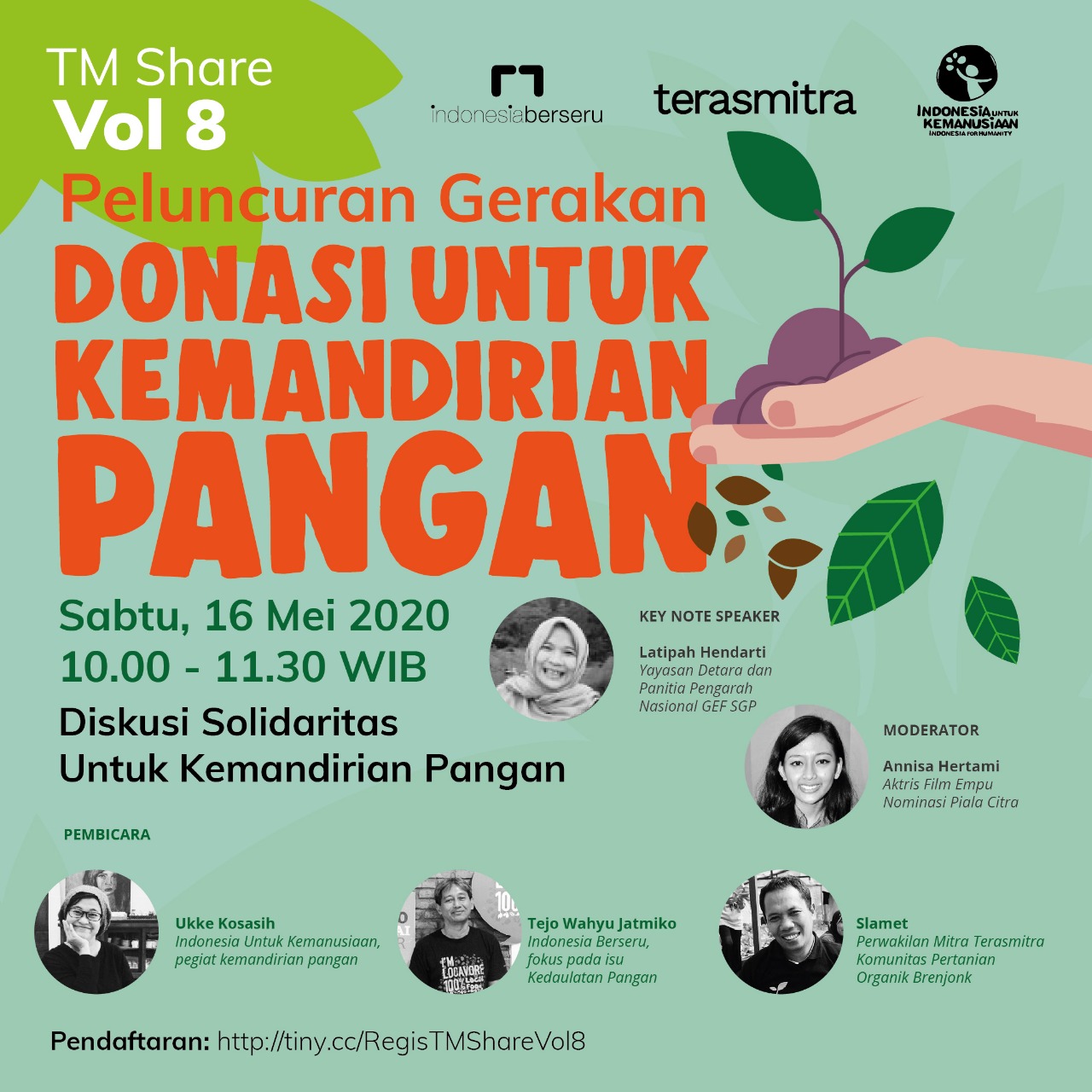
Jakarta, 16 Mei – Indonesia for Humanity (IKa), Terasmitra, and Indonesia Berseru launch Funding for Food Self-Sufficiency, a movement that aims to support communities to build a self-sufficient food production system.
Latifah Hendarti, keynote speaker from the Detara Foundation and GEF SG National Management Board Panitia Pengarah Nasional GEF SG, said that this movement aims to build collaboration that can support and respond to the challenges of meeting diverse and nutritious local food security needs which are increasingly difficult to access. It will also respond to the Indonesia’s potential food crisis.
“This movement is focused on establishing a community food system that is stronger, acknowledges the role of farmers in villages, including community initiative to provide agricultural produce self-sufficiently and facilitating a community of technical support,” said Latifah.
The launch of this movement included a discussion on the theme, “Solidarity for Food Self-Sufficiency,” with speakers including: Ukke Kosasih (Indonesia for Humanity, food security activist), Tejo Wahyu Jatmiko (Indonesia Berseru, food sovereignty activist) and Slamet (representative from Terasmitra partner, the Brenjok Organic Farming Community) and moderated by Annisa Hertami (actor in the film “Empu” – Indonesia’s Citra Award nominee).
Tejo Wahyu Jatmiko explained that talking about the impact of Covid-19 on the food crisis is an urgent matter, though few are yet aware of this.
“The Indonesian government is late in responding to the threat of a food crisis during the pandemic. The government has only just given its attention and taken action following the WHO’s announcement that the pandemic will also impact on the food crisis,” said Tejo.
The response is very late in comparison to other countries, bearing in mind that there is a relationship between dependency between states and the food produce that is consumed by the people. This relationship can be seen from people’s consumption which is influenced by the global food supply chain and so they have become used to eating imported fruit, bread and meat.
“It is thus important that we in Indonesia build a community food system, a system from, by and for the local community. The focus should be on involving local communities and not damaging the environment as well as cementing community relations” Tejo added.
This issue was underlined by Slamet from the Brenjok Organic Farming Community. He said that building a community food system was key to promoting village level self-sufficiency in the management of sustainable business based on the principles of social enterprise.
“Building a community food system is not difficult if the people are made aware of the important of growing food. In the village, we have a lot of land that can be used to grow produce, moreover we can begin by planting in our own backyards,” said Slamet
As well as encouraging the people to grow produce, Slamet also emphasized the important of protecting the environment and agricultural produce by not using chemical inputs that have the potential to impact negatively on soil fertility and the produce itself. So the community food system should be made sustainable by taking care of the environment.
“Together with my family I moved to Cisarua from Bintaro in order to campaign on behalf of food security which begins at family level,” said Ukke Kosasih. When they first moved, the land that Ukke and her family occupied only grew two types of vegetables, but after four years they now have over a thousand different types of produce and the land has become a place of learning from people from the city, Jakarta in particular.
The discussion was closed by the moderator, Annisa Hertami, who said that the issue of food is related to the support of the people and the support of the government. It is hoped that this movement will broaden and that much can be done by every community group.
“During the pandemic what people need is hope, and a food self-sufficiency movement provides new hope that will enable us to avoid a food crisis,” said Annisa in closing the event.
Policies to address Covid-19 globally have yet to look at the specific needs of women victims of violence. This is evidenced by the steep rise in cases of violence against in a number of countries. In Indonesia, the Large-Scale Social Distancing (PSBB) policy is certain to increase women’s vulnerability to abuse. It is difficult for women to escape violent conditions in the home, they are not free to meet with friends, talk to counsellors or seek help. Furthermore, job losses and loss of income caused by Covid-19 have resulted in many women losing their negotiating position with the perpetrators of violence.
Organizations providing services have also noticed changes since the global pandemic struck. Now they receive requests for help via telephone and email, something that will impact on the number of cases reported as this will be dependent on access to communications and funding available for the duration of the PSBB. In addition, the implementation of the PSBB has reduced the capacity of service providers to provide legal aid and psychological support.
In response to these changes, Indonesia for Humanity (IKa), in partnership with the National Commission for Women held a Focus Group Discussion (FGD) under the umbrella of Pundi Perempuan with the theme, “Responding to the Impact of Covid-19 on Women Victims of Violence Together with Service Providers and Women Crisis Centers,” which was attended by 23 participants from 19 organizations that provide online services.
The FGD was opened by IKa’s Executive Director, Maria Anik Tunjung. In her welcoming remarks, she informed the group that the aim of the FGD was to map the needs of organizations that provide services and their response to the Covide-19 pandemic, and provide a basis on which to undertake fundraising activities during the pandemic. The National Commission for Women has already disseminated a questionnaire in order to ascertain the impact of Covid-19 on the provision of services to women victims of violence. This data will be used by the National Commission for Women to make recommendations in order to enable these organizations to carry out their activities.
The FGD was split up into four session and moderated by a representative from the National Commission for Women, Christina Yulita. A number of issues were identified, including: 1) every organization needs to maximize its online, email and Whatsapp services, 2) nearly all organizations provide online support, and only the most serious cases are handled in person, in line with health and safety protocols, 3) cases most frequently reported involve domestic violence, and 4) online consultation is not as effective as meeting in person
The FGD was closed with a discussion to identify organizational strategies and needs in order to continue providing support during the pandemic. It is hoped that the findings of the FGD will provide a foundation to better support service provision for women victims of violence during the pandemic.
Press Release: Launch of the Donation Movement for Food Self-Sufficiency
(Raising and Distributing Food Donations)
Jakarta- The Covid-19 pandemic has created emergency conditions regarding food provision, particularly the availability of fresh and nutritious produce. This is not just about basic needs, but also about increasing the body’s natural immunity (WHO, 2020).
The food crisis is happening not only because of distribution problems from the centers of production to the consumer, but also because of the potential disruption to the production process because of the extension of the Large-Scale Social Distancing policy (PSBB).
For Indonesia, with 24.79 million poor (9.86 million in urban centers and 14.93 million in rural areas) as per September 2019 (BPS.go.id) the combination of the food crisis, nutrition crisis and Covid-19 will have an impact for many years to come
As part of the efforts to address this food crisis, Indonesia for Humanity (IKa), Terasmitra and the Indonesian Berseru Association are launching the “Donation Movement for Food Self-Sufficiency” online as part of the TM Share Volume 8 event on Saturday 16 May 2020, from 10.00-11.00 via Zoom (http://tiny.cc/RegisTMShareVol8)
The launch of this movement will be opened by keynote speaker: Latipah Hendarti from the Detara Foundation and GEF SGP National Steering Committee, followed by a discussion on the theme, “Solidarity for Food Self-Sufficiency” with speakers including Ukke Koassih (IKa, food self-sufficiency activist), Tejo Wahyu Jatmiko (Indonesia Berseru, food sovereignty activist) and Slamet (Terasmitra partner – Brenjonk Organic Farming Community) and moderated Annisa Hertami (Actor in the Film “Empu” – Citra Award nominee).
The Donation for Food Self-Sufficiency Movement is a mechanism for collecting and distributing food donations to communities in need in the midst of the Covid-19 pandemic.
This movement is being launched in order to build collaboration and help address the challenges of local food and nutrition needs, which are increasingly difficult to access, and to address the potential food crisis in Indonesia. Indonesia must establish a more resilient community-based food production system, acknowledge the important role of farmers in rural areas, including community initiatives that provide food self-sufficiently and technical support.
The Donations Movement for Food Self-Sufficiency will comprise of two program strands: first, fund raising and second, grant distribution via Pundi Hijau.
Fund-Raising Program
Collecting public donations:
Donations will be collected online in an open and transparent way from diverse sources including individuals, communities and the private sector
Donations will be collected between 16 May-30 November 2020
Donations will be sent to IKa’s bank account: Bank Mandiri Cab.Salemba Tengah an. Yayasan Sosial Indonesia untuk Kemanusiaan (No rek. 123.00.05300.001)
Grant Distribution Program
Activities
Facilitate the exchange and use of seeds including: (1) local seed bank communities; (2) communities that wish to strengthen the local food system; (3) technical support communities
Grant Selection and Distribution Process
Mechanisms for selection will be carried out by the three partner organizations
Grants in the region of 3-5 million rupiah will be allocated per community
As this funding is intended for a short-term response to Covid-19, calls for proposals will be opened as and when sufficient donations have been collected
Announcement of successful applicants will be made via the websites and social media accounts of the organizing partners
Successful recipients of the grant will need to send progress reports with supporting information including photographs and quotes following program implementation
Funding Criteria
Community organizations and groups that include community-based seed banks, communities that wish to strengthen local food security systems and technical support communities
Organize food-growing at individual household and/or community-wide level
Organizations and groups that are new to food production much have access to support organizations that can provide technical assistance and capacity building
Grants may be used to obtain seeds for food plants and vegetables that can be harvested within 3-5 months, waste processing infrastructure, planting containers, composters, costs of preparing
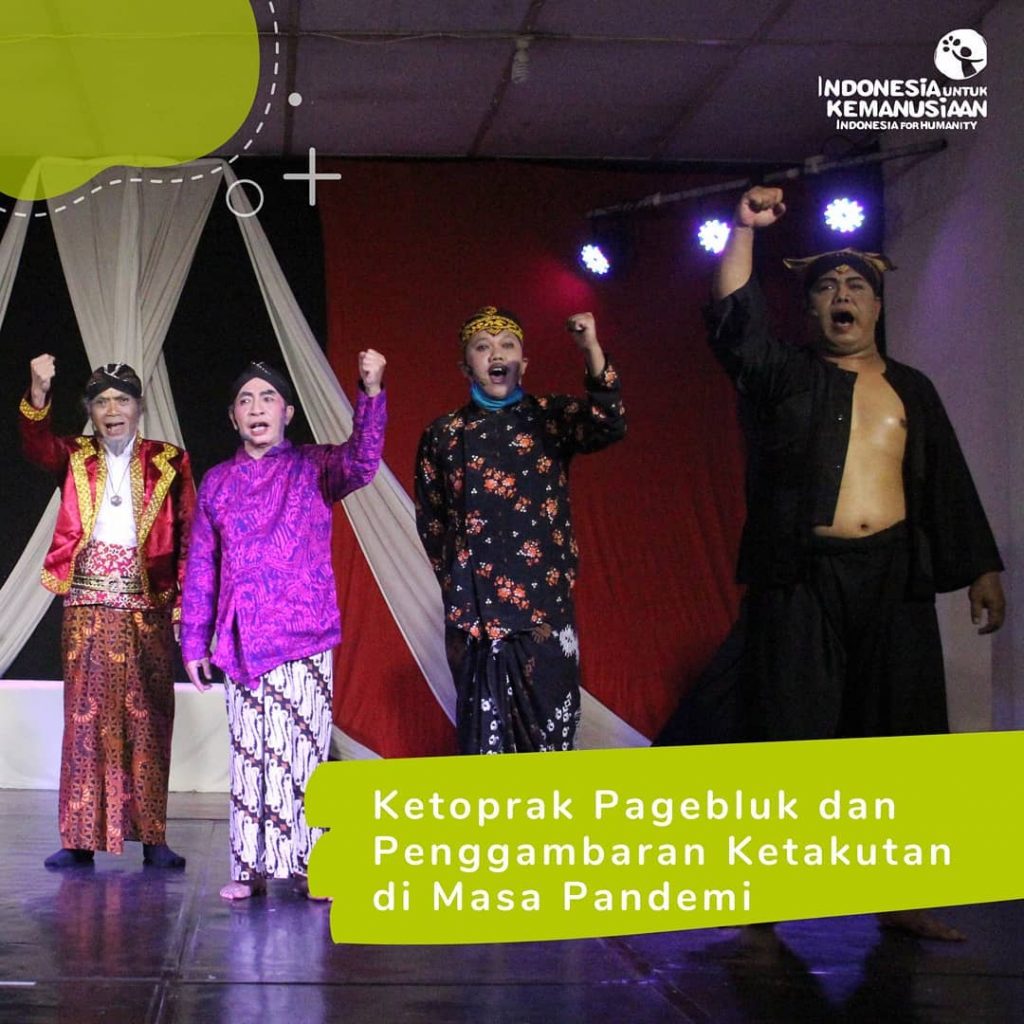
The Covid-19 pandemic is something that places fear into the hearts of the Indonesian people. The first case of this virus in Indonesia was discovered two months ago, and now there are more than 12 million people infected worldwide. This fear is similar to the fear that was experienced by the victims of the ’65 political tragedy and the 30 September Movement mass killings.
“In ’65 they were thrown into prison, on Buru Island, and now they are being ostracized by their families, their corpses are stigmatized because of a disease. So it’s the same, the ’65 tragedy and this corona pandemic,’ said Winarso, Coordinator of the Ketoprak Srawung Bersama (KSB) theater group – ketoprak is a traditional Javanese theatrical form.
Pagebluk, the title of the performance (meaning plague in Javanese), directed by ST Wiyono, evolved from an idea by Winarso. ST Wiyono is an artist and playwright that has devoted 32 years of his life to the Surakarta Cultural Center (Taman Budaya). His work always addresses three elements: education, culture and creation. A lot of ST Wiyono’s work, particularly from 1980-1990, was highly regarded at national level. His plays Dua Matahari (Two Suns), Ranggalawe (a Javanese historical figure) and Gendhuk Gotri (a Shadow Puppet character) all made it into the top three at the National Theater Festival.
Ketoprak Pagebluk involves both traditional and modern performers, the grandchildren of victims and other young people, mainly students from two of Surakarta’s universities. The performance is accompanied by musicians from Lumbini. Ketoprak Pagebluk’s performance was supported by Indonesia for Humanity (IKa) and the Peduli Program.
The Peduli Program is a program working on poverty eradication that adopts an inclusive development approach in order to ensure that marginal communities are able to participate in and reap the benefits of development. The Peduli Program works with and for marginalized communities all over Indonesia, to support their access to public services and economic opportunities.
Originally, the ketoprak troupe was going to perform an adaptation Mangir, a story by Pramoedya Ananta Toer, on 28 March 2020. However, Sekber ’65 (an organization representing victims of the 1965 humanitarian tragedy) in consultation with the artists, decided to put on a show that responds to the current situation instead. The decision was taken to put on a ketoprak performance aimed at educating the audience about the pandemic, and thus Pagebluk was written to be performed online so that it could be viewed by a wider audience, along with a discussion on the theme of Covid-19.
Pagebluk tells the story of Seloguminto District which has been struck by Covid-19. Initially, the District Head was unsure how to respond to the plague, but following discussion with two of his trusted advisers, he decided to introduce a lockdown of the District, which is an acronym of:
L: Lungguh ayem ning omah (sitting in peace at home)
O: Ora usah keluyuran (can’t leave the house if it’s not important)
C: Cukup ngasohi (take lots of rest)
K: Kumpul karo keluarga (gather and be happy with your family)
D: Dipepe awake (bathe in the rays of the sun)
O: Olahraga secukupe (exercise)
W: Wisuh karo sabun (wash your hands with soap)
N: Ngerungo seng akeh (don’t make a fuss)
This decision didn’t come out of the blue. Initially Adimas Senopati, one of the District elders, felt that the District Head had to issue a firm policy in order that Covid-19 be contained. He pushed for a policy that would see the arrest of any villagers that dared to leave their homes. He did not care about the rights of the villagers. However, thanks to discussion with one of the soldiers who felt guilty at having perpetrated acts of violence and mass killings 55 years previously, in the end the District Head issued a policy that focused on containing the virus but also honored human rights.
Cultural Approach to Addressing Human Rights
To this day, the discussion of gross human rights violations in Indonesia requires an approach that is deemed acceptable by society. Both traditional and contemporary art forms are used to discuss social issues, but their use in raising human rights issues remains limited. Artists and performers themselves also have different opinions. Winarso recounts that initially, many traditional and contemporary artists in Surakarta rejected the idea of portraying human rights violations.
After a lot of discussion and through a personal approach, a number of artists and performers agreed to raise the issue of gross human rights violations. In addition, some of the artists and performers met with the victims and their children and grandchildren so that they could get a complete picture of what the victims and their families experience. Following this process, a number of parties became involved in the production that was presented by KSB, including students and lecturers from two universities in Surakarta.
Ketoprak Pagebluk was well received by the broader public. This is because ketoprak is a traditional theatrical genre which is not only entertainment but also has the capacity of providing education to the public regarding Covid-19 and gross human rights violations were perpetrated in Indonesia. Moreover, the Mayor of Surakarta gave his appreciation of the production via a short WhatsApp message expressing his hope that Pagebluk might be performed in the Municipal Hall.
The Ketoprak Pagebluk production is an effective approach that can be further developed by other parties in order to provide public education regarding gross human rights violations in Indonesia. We all need to remember and learn from the past in order that these tragedies might not be repeated in the future.
“With the arts we can educate the public without being patronizing. The Arts are a very powerful medium that can be gladly received by the public,” said Winarso.
*Ketoprak is a traditional Javanese theatrical form; Pagebluk is a Javanese word for plague
The Association of Families of the Victims of Talangsari Lampung (PK2TL) held a meeting with the inhabitants of Rajabasa Lama Village in order to discuss strategies to strengthen the community by accessing village funds and in collaboration with students. The meeting was held on 29 January 2020 in the Talangsari prayer hall, Sabing Putra III, Lampung.
PK2TL also carried out comparative research of the Rajabasa Lama Women’s Group to learn about Kain Tapis, traditional woven cloth,on 27 February 2020 at the Tapis Jejama Studio. The production of Kain Tapis is a traditional craft of the people of Lampung which is woven from cotton thread and embroidered with motives and patterns using metallic, silver or gold thread. The comparative research is important bearing in mind that Tapis Jejama Studio often acts as reference for Kain Tapis exhibitions and thus has become an important resource for all matters concerned with Kain Tapis.
PK2TL also held an audience with the East Lampung District Social Services on 6 March 2020 in order to discuss the rehabilitation of the Talangsari victims that reside in East Lampung. A number of issues were identified that require follow-up action, including:
Support for the development of local knowledge in an area that has seen social conflict (provision of tools for arts and culture)
Various forms of support for local enterprise groups
Social Security (BPJS) provided by the Social Services, Health Services and other BPJS agencies for the families of victims and inhabitants of Talangsari who have yet to receive the Indonesia Sehat Card (Healthy Indonesia Card) which enables them to access free services.
Pundi Insani provides grants for the rehabilitation and empowerment of the victims of human rights violations. Pundi Insani is currently supported by the Peduli Program, which aims to create a socially inclsive movement to promote dignity in everyday activities.
Sekber 65, an organization which represents the victims of the 1965 political tragedy, held a Focus Group Discussion (FGD) to disseminate the Municipal Regulation on the Welfare of the Elderly in Surakarta, Central Java, on 12 February 2020. This FGD was attended by members of the Regional Government Administration Agencies (OPD), the Regional Commission for the Elderly and the Senior Citizens’ Association to create a new Municipal Regulation regarding the Welfare of the Elderly in Surakarta, in particular those senior citizens that have suffered discrimination since the issuance of Surakarta Regional Government Regulation (Perda) No. 4 2019 in respect of Care for the Elderly.
In addition, Sekber 65 in partnership with the Witness and Victim Protection Agency (LPSK) signed an MoU to provide medical and mental health support in the form of free treatment at Moewardi General Hospital through the mechanism of the ‘Green Book’ and in line with the Social Security Implementation Agency (BPJS).
Unfortunately, because of the Covid-19 pandemic, members of Sekber 65 are unable to seek treatment at Moewardi General Hospital, as this hospital has been designated a Covid-19 hospital. As a result, even though they are sick and they are in possession of the ‘Green Book’ the victims are unable to receive treatment.Pundi Insani raises funding and resources for the rehabilitations and empowerment of victims of human rights violations. Pundi Insan is supported by the Peduli Program which aims to create a socially inclusive movement to promote dignity in everyday activities.
Fopperham, an NGO working on Human Rights and Education, has been providing support to senior citizens and survivors in Yogyakarta from January to March 2020. One of the activities was learning to sing the Panembrono together, with the aim of providing a forum for senior citizens and victims to meet (1/16). The Panembromo is a singing style that is performed in unison with or without music. There are a number of types of song that can be used for the Panembromo and the lyrics can be adapted depending on the event.
In addition, Fopperham also helped to provide healthcare facilities to the senior citizens and the victims by facilitating access to the Victim and Witness Protection Agency’s ‘Green Book’. This activity aimed to access to reparation services provided by the Victim and Witness Protection Agency (LPSK) from 24 October 2019 to 23 April 2020. These two activities were completed just before the Covid-19 pandemic took hold.Pundi Insani is the pillar that provides grants and resources for the rehabilitation and empowerment of human rights victims. Pundi Insani is currently supported by the Peduli Program which aims to create a socially-inclusive movement to promote the equal and dignified treatment of all.
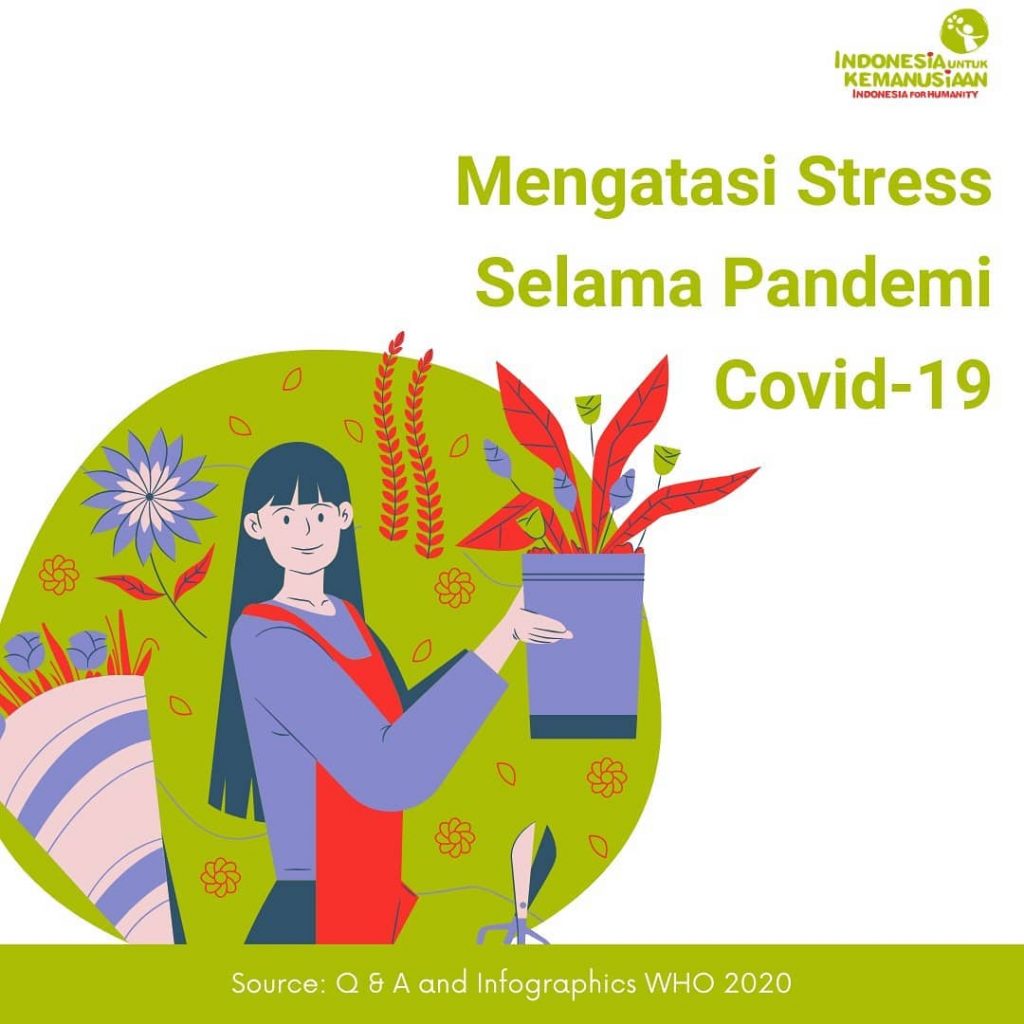
The Covid-19 pandemic requires us to reduce physical activities outside of the home. This pandemic is highly like to put pressure on us and can result in stress, or even depression. It is important therefore that we manage our lives so that we can avoid stress.
There are a number of ways that we can manage stress during the pandemic:
Communicate with our Family and Friends
Communicate with those nearest to us, and if you are far from your family, get into the habit of calling them to help you and them get throughout this period of crisis.
Make Sure You Lead a Healthy and Pleasant Lifestyle
Only eat as much as you need and don’t overeat, breathe calmly, speak calmly and without contempt, try and be active but listen to the universe.
Try and Avoid Negativity when Under Pressure
Don’t rely on smoking, drinking alcohol and medication for dealing with stress, try and cut down. If you feel you can’t cope, get in touch with health service providers or counsellors.
Get the Facts
Try and find information that can help you deal with the pandemic. Look for credible sources such as the media, health providers, the WHO and government agencies.
Develop Good Habits
Think of the ways that you have used in the past to make yourself calm. Use these good habits to help you manage your emotions in these difficult times.
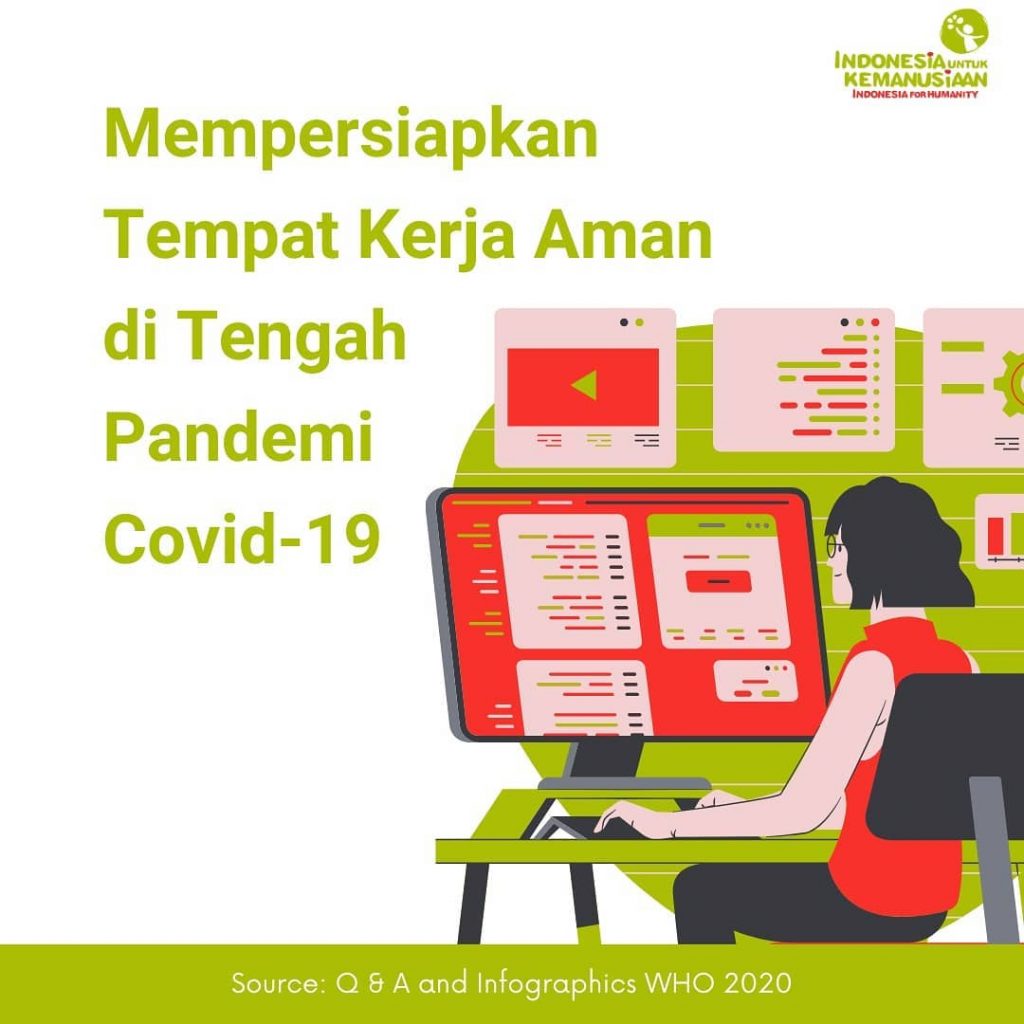
According to the experts, the Covid-19 pandemic will not be over in the near future. This pandemic is having a direct impact on the Indonesian economy. It is important therefore that organizations and businesses ensure a good response to the pandemic.
The following is a guide for organizations and businesses on how to Prepare a Safe Workplace in the Midst of the Covid-19 Pandemic:
Disinfect the Office or Place of Work
The office should be systematically cleaned with disinfectant, ensuring all surfaces that are frequently touched such as chairs, tables, telephones, keyboards etc. are thoroughly and regularly cleaned.
Ensure a Safe Environment
Ensure that face masks and tissues are available for all staff, including a place for trash. It is also important to provide alcohol-based antiseptic hand wash.
Implement Work From Home System
Distance working can help an organization to function whilst ensuring a safe working environment for staff.
Communicate with Staff
Encourage staff to observe government regulations with regards to travel and avoiding crowded locations for example.
Monitor Staff Health
Make the staff aware that if they have a cough or a fever that they should rest at home.